

Paul Green
Founder
Paul moved to Guanajuato in 2018 and founded My Mexico Move in 2021. He writes the guides and builds the city profiles, tools and member platform.
City profile · Baja California Sur
A dusty farm town turned surf and remote-work base on the Pacific, ten minutes from Todos Santos and five from Cerritos beach, where Starlink beats fiber and the title check matters more than the view.
Verified November 2026
El Pescadero is a small farming village on the Pacific coast of Baja California Sur, on Federal Highway 19 about 8 kilometres south of Todos Santos and about an hour north of Cabo San Lucas. It is the town behind Cerritos Beach, and this profile covers both together, because that is how the place works: the village is where people live, shop and work, and the beach, about 5 kilometres southwest of the town centre, is where they surf, swim and watch the sunset. The 2020 census counted 2,245 residents in El Pescadero, though other sources put the population higher, at 3,151 in 2015 and about 4,250 in more recent estimates, and the gap itself tells the story: the village has grown fast in the last decade, and nobody has an exact count of the foreigners who now live here part or full time.
What draws them is a combination no other Baja town quite matches. Cerritos is the most consistent beginner to intermediate surf break on the Pacific side of southern Baja, with a sandy bottom and a friendly right point at the north end, and it is also one of the few beaches on this coast where swimming is reasonably safe. Behind the beach is an organic farming valley, the huerta, where chili and basil fields, palm-lined roads and farm-to-table restaurants sit between the Sierra de la Laguna mountains and the sea. And the whole place runs at a slower, cheaper, dustier pace than Cabo, an hour south, or even Todos Santos, ten minutes north.
The honest bargain is simple. You get surf you can walk to, farm food, a small international community of surfers, remote workers, artists and retirees, and whale watching from the shore in winter. What you give up is infrastructure: there is no verified fiber internet in El Pescadero, most properties run on wells and cisterns rather than municipal water, many roads are dirt, and the nearest hospital is over an hour away in La Paz. Buying here also carries a real legal trap, ejido land, which is covered plainly in the Real estate market section below. If you want a surf town with a farm-to-table table and a Starlink dish, El Pescadero is one of the most appealing landings in Baja. If you need fiber, paved streets and a hospital in town, look at Todos Santos instead.
Travel advisory: Baja California Sur is at Level 2 (Exercise Increased Caution) in the US State Department Mexico advisory dated 11 August 2026, with no specific travel restrictions for US government employees in the state. The full picture, including what that level does and does not mean for El Pescadero, is in the Safety section below.
El Pescadero is split by Highway 19, and that split is the whole map. On the beach side of the highway sit the roads down to Cerritos and San Pedrito, the surf camps, the boutique hotels and the newer developments. On the town side sit the village itself, the farms, the cafes and the older houses. The village streets are a mix of pavement and dirt, and the roads out to the beaches and the farms are mostly dirt, which is fine in the dry months and genuinely difficult after rain in September and October, when some properties become hard to reach.
A car is close to essential here. There is no town bus system, and while the village itself is walkable, the beach, the farms and Todos Santos are not. The Fradisa bus runs between El Pescadero and Todos Santos about every four hours, tickets cost MXN 65 to 80, and the journey takes about 15 minutes. By car, Todos Santos is about 11 kilometres and 10 to 15 minutes north, La Paz is about 80 kilometres and about 1 hour 15 minutes north, Cabo San Lucas is about 75 kilometres and about an hour south, Los Cabos airport (SJD) is about 110 kilometres and about 1 hour 30 minutes away via Cabo San Lucas, and La Paz airport is about 90 kilometres and about 1 hour 15 minutes away. Baja California Sur is a hassle-free zone, so cars can drive throughout the state without an entry permit.
Getting here means flying into SJD or La Paz and driving, or driving the peninsula. There is no verified local taxi fare table for El Pescadero, so agree the price before you get in, and do not plan on app-based rides working the way they do in a city. Most residents own a car, and a high-clearance vehicle is worth having for the dirt roads and the beach tracks.
El Pescadero has no formal neighbourhood names that listings agree on. Think in bands instead, the same way residents do.
The village centre and the huerta. The town itself, around the highway and the farm roads east of it, where the cafes, the small shops, the taco stands and the older Mexican houses sit, and the farm belt beyond, with chili and basil fields, palm-lined roads and low-density houses on larger lots. The most Mexican-feeling part of the area, the cheapest rents, the most dirt roads, and the furthest from the sand. This is where the organic farms that supply the restaurants are, and where the March Chili and Strawberry Festival is held.
Cerritos Beach. The beachfront zone at the end of the road southwest of town, with surf schools, beach restaurants, the Cerritos Beach Club, boutique hotels and the newer condo developments such as Soleado Cerritos and Tortuga del Sol. The most expensive band, the most tourist-facing, and the one place on this coast where you can walk to the surf. Paid parking sits behind the beach club, about USD 5 for the day. Beachfront here means surf access, not a quiet street.
San Pedrito. About 2 kilometres north of Cerritos, a quieter, less developed beach with stronger waves, a rocky bottom and strong currents, aimed at experienced surfers, long-term campers and people who wanted to get away from the organised beach scene. The Casa Paz casita and the Kahal restaurant sit on this stretch. No lifeguards are verified at either beach, so the water is yours to judge.
The highway strip and the developments between town and beach. The newer houses, micro-communities such as Casa Hygge, completed in April 2023, and the residential pockets on both sides of Highway 19, including Huerta Hermosa, where the 2024 Casa Kalida listing sits. This is where most foreign buyers land now: new construction, a pool, a garden, and a five to ten minute drive to the beach rather than walking distance.
No verified per-neighbourhood rent table is published on this page. The honest way to choose is a scouting stay: a week in the village and a week near the beach will tell you more than any rent table could, and you should drive any prospective street after heavy rain before committing.
Daily shopping in El Pescadero splits three ways: the village shops, the markets, and the Todos Santos or La Paz run. The village has small grocery stores, a Pemex and an Oxxo on the highway, pharmacies, and fresh seafood from the boats. There is no large supermarket in El Pescadero: the closest full shop is in Todos Santos, ten minutes north, and the big shop, including Costco, is in La Paz or Cabo San Lucas, about an hour away.
The markets are the social calendar as much as the shopping. Baja Beans Cafeteria hosts a weekly farmers market on Sundays, and the Cerritos Farmers Market runs on Wednesdays and Sundays. The Todos Santos farmers market runs Saturday mornings, a short drive north, and is the larger of the two. The farm-to-table restaurants here grow much of their own produce, and the same farms sell at the markets, so the produce is genuinely local: the valley grows chili, basil, strawberries, melons, figs, guava and sapote, much of it for export as well as for the local table.
One useful price anchor: the roadside taco stands along Highway 19 serve fish tacos for about $2 each, and the market is where the food budget stays low. Imported goods and familiar North American brands cost considerably more and are patchy, so most residents cook with what the market and the farms sell and treat the import aisle as a treat, not a staple.
El Pescadero has a growing, visible foreign community, mostly Americans and Canadians, with Europeans in smaller numbers, and it is younger and more working-age than the retiree towns further south. The mix is surfers, remote workers, artists, yoga and wellness people, organic farmers and snowbirds, and the peak season runs roughly November to April, overlapping with the whale season. One 2026 comparison of the two towns puts it plainly: the El Pescadero buyer is typically 35 to 50, often still working remotely, a surfer or outdoor enthusiast, willing to build or renovate, and attracted by the lower entry point.
The community is small enough to know people quickly and big enough to have its own gravity: surf schools and yoga studios, farm-to-table restaurants, the Sunday market at Baja Beans, the Pescadero Surf Camp at the end of town, and intentional communities such as Baljalla, a small remote-living residency for remote workers and creatives with Starlink WiFi and solar power, from MXN 8,000 a month. The social world runs in English in the cafes and on the beach, but Spanish is the primary language, and the market, the bus, the bank and the landlord all run in Spanish.
El Pescadero still feels like a working farm village rather than a purpose-built expat destination, and that tension is the story of the place. Fishermen launch pangas through the surf at Punta Lobos, farmers work the huerta, and the Chili and Strawberry Festival each March celebrates the agriculture. But the buying pressure is real: the Cerritos to Todos Santos stretch has seen rapid development in the last decade, and prices have risen with it. Come as a neighbour, not as a buyer of a view, and the village will treat you accordingly. Todos Santos, ten minutes north, is the bigger, more polished sibling, with paved roads, municipal water and fiber internet, and most residents treat the two towns as one area.
Rents below are realistic 2026 ranges for decent long-term rentals in El Pescadero, built from live listings checked November 2026. Expect wide variation by furnishing, distance from the beach, and season: beachfront and short-term places run much higher, and winter rates are not long-term rates. Dollar conversions use 18.62 pesos to the dollar, the Banxico closing rate of 11 November 2026. Most listings in this area are quoted in US dollars, not pesos.
Small place, long-term. About $700 to $1,450 a month. A studio in the village was advertised in June 2026 at $700 a month with utilities included except electricity. Rentola listed 3 apartments in El Pescadero in November 2026, with an average rent of MXN 21,000 a month and a range of MXN 17,000 to 23,000, about $913 to $1,235. A one-bedroom casita at Playa San Pedrito, Casa Paz, was offered in November 2026 on a 12-month lease at $1,450 a month, with 30 nights at $1,600, and electricity running about MXN 650 every two months. Treat the range as an estimate built from a live listing sample, not a verified market range.
Two bedrooms and larger houses. No verified long-term range is published on this page, because the larger houses near the beach are mostly priced short-term, not long-term. The short-term market is strong: AirROI counted 24 active Cerritos Beach listings in the 12 months to October 2026, averaging MXN 4,694 a night and booked on 36 percent of available nights. A well-placed two-bedroom near the beach rents for $150 to $250 a night in green season and $250 to $400 in peak months, according to a 2026 Cerritos guide, which is why owners prefer short-term. If you want a larger house long-term, budget above the small-place range, expect a six to twelve month lease, and search on the ground: the best rentals move through local Facebook groups, word of mouth and local agents, and some properties are never formally listed online.
Utilities and deposits. Rentola advises budgeting an extra MXN 1,500 to 4,500 a month on top of rent for apartments rented directly from an owner, and MXN 2,500 to 6,000 for houses, and notes that most owners require a deposit and first month in advance, so budget two to three months rent to move in. Many properties run on wells and cisterns rather than municipal water, and solar panels are popular here because of the abundant sunshine, the cost of bringing power to raw land, and power outages that are somewhat frequent though usually short-term. Check the water, the power and the internet on the specific property before you sign, and do not sign a lease from abroad.
El Pescadero and Cerritos sit on the coast, inside Mexico's restricted zone, so a foreign buyer cannot hold residential title directly and needs a fideicomiso bank trust, a renewable 50-year trust, with the federal SRE permit fee at MXN 21,650. A notario publico, not a title company, is the legal figure who closes a sale in Mexico. Closing costs run about 5 to 7 percent, and the La Paz municipality acquisition tax is 3 percent since 1 January 2026.
Price shapes from a 2026 Cerritos guide: raw lots at Cerritos start around $150,000, finished homes run about $400,000 to $800,000, and beachfront lots alone command $300,000 to $600,000 or more. In El Pescadero town, interior lots start around $80,000 to $120,000, and homes in the $300,000 to $500,000 range offer more space than beach-adjacent equivalents. The trade is distance: the town is a five to ten minute drive from the beach rather than walking distance. Small boutique developments such as Soleado Cerritos and Tortuga del Sol, not large towers, are the pattern here.
Ejido land is the risk to understand before you buy anything here. Ejido land is communal agricultural land created after the Mexican Revolution. It cannot legally be sold to foreigners, and any such sale is void and unenforceable. A parcel can only become private property through a conversion process called dominio pleno, which needs a two-thirds vote of the ejido assembly, certification through the Registro Agrario Nacional, and registration in the Public Registry of Property, a process that takes 12 to 36 months. A fideicomiso can only be established on land with a registered private title: no Mexican bank will establish one on ejido land. A certificado parcelario proves use rights, not title, and an assignment of ejido rights does not transfer title. The risk zones in Baja California Sur include outlying Pacific-side parcels, and the Cerritos through El Pescadero to Todos Santos stretch has seen rapid development in the last decade. Most established developments here, including Rancho Pescadero, Tortuga del Sol and Soleado Cerritos, have fully privatized titles, but outlying parcels and informal subdivisions outside established developments still carry ejido status, and a price far below the market is usually the sign. Before any purchase, have an independent local attorney verify the title at the Public Registry of Property in La Paz and cross-reference it with the Registro Agrario Nacional, and request a certificado de libertad de gravamen, a certificate that the title is free of liens. Rent first, for at least a year and through a summer and a hurricane season, and buy only after you know which street, which beach and which water supply you can live with. Do not buy property in someone else's name to save time or money.
Day-to-day healthcare in El Pescadero is basic, and that sentence needs its second half: serious care leaves the area. El Pescadero has small medical clinics that can provide care at the basic level, and Todos Santos, ten minutes north, has a 24-hour public health centre, the Centro de Salud, and St Jude's Medical Center, a private hospital with a 24-hour emergency room. We have not verified English-language service or insurer billing at any of them, so confirm those in person. If you have a major ongoing condition that needs frequent specialist care, the drive to La Paz belongs in your decision, not in a footnote.
La Paz, about 80 kilometres and about 1 hour 15 minutes north, is the hospital base. Its main public hospital is the Hospital de Especialidades IMSS-Bienestar Salvatierra, with 36 specialties, and its main private hospital is Hospital Fidepaz, with a 24-hour emergency room and some English-speaking staff. Los Cabos, about an hour south, is the other option for private care. No verified El Pescadero-only clinic list, English-speaking doctor list or private consultation prices are published on this page, so do not plan your care around either.
Two gaps matter. First, no IMSS facility is verified in El Pescadero itself, so public care means Todos Santos and La Paz. IMSS voluntary enrollment is available to legal residents: a 2026 Todos Santos buyers guide puts it at MXN 20,538.59 a year, with some serious pre-existing conditions excluded, so read the current rules before you rely on it. Second, in an emergency, dial 911, and remember that emergency services are limited in remote or rural areas. Private insurance bought locally is the usual complement for people who want faster access. Most residents here run a hybrid: local clinics and pharmacies for routine needs, Todos Santos for urgent care, La Paz for everything serious, and IMSS or private insurance as the financial backstop.
| Facility | Type | What the profile says |
|---|---|---|
| Local clinics, El Pescadero | Private, local | Basic care reported; no verified list |
| Centro de Salud, Todos Santos | Public | 24-hour public health centre, about 10 minutes away |
| St Jude's Medical Center, Todos Santos | Private | Private hospital, 24-hour emergency care, about 10 minutes away |
| Hospital Fidepaz, La Paz | Private | Private hospital, 24-hour emergency room, about 1 hour 15 minutes away; some English-speaking staff |
| Hospital de Especialidades IMSS-Bienestar Salvatierra, La Paz | Public | State main specialty hospital, 36 specialties, about 1 hour 15 minutes away |
| Private hospitals, Los Cabos | Private | Second private-care option, about 1 hour south |
El Pescadero suits a retiree who wants surf, sun and a small community above almost everything else and is honest about the trade-offs. The maths works: the estimated single-person budget on this page is $1,300 to $2,400 a month, and the verified 2026 average Social Security benefit is $2,071 a month (Social Security Administration, 2026 COLA Fact Sheet), so a single retiree on the average benefit covers a modest El Pescadero life at the lower end of the range, and a couple on two benefits lives comfortably. The beach is a short drive away, the winter social calendar is full, whales pass the shore from December to April, and La Paz is about 1 hour 15 minutes away for hospitals and flights.
The trade-offs for retirees are the ones named across this profile: serious healthcare is a drive away, not in town; the internet runs on Starlink, not fiber; water comes from wells and cisterns on many properties; dirt roads get difficult in the September rains; and the social scene thins out sharply when the winter visitors leave, with many restaurants and shops closing or cutting hours in the low season. It is a poor fit for a retiree who needs frequent specialist care, totally reliable power and internet, or a large peer community that stays all year. It is a strong fit for a retiree who is adaptable, independent, comfortable driving everywhere, and happy to trade polish for surf, sunsets and a community that knows their name. Come for a month in September, not only in the mild winter months, live through a storm, and check whether 1 hour 15 minutes to a hospital feels close enough for your health situation.
Remote workers can do fine here, with one clear condition: do not assume fiber internet exists. There is no verified fiber internet in El Pescadero. Todos Santos has fiber through Telmex, but El Pescadero relies on DSL at about 20 to 50 Mbps and on Starlink satellite, which a 2026 Los Cabos connectivity guide puts at 50 to 200 Mbps for about $50 a month after a hardware kit of about $499, with full coverage across Baja California Sur. Starlink is the primary broadband option for most properties outside the Todos Santos urban core, and listings here advertise it as a feature: one 2024-built house in Huerta Hermosa is listed as wired for Starlink as the fastest and most reliable internet available in the area, and the Casa Paz casita advertises Baja Connect WiFi. Test the actual speed in the exact property before you sign a lease, and keep a mobile hotspot as backup, because satellite weather can cause brief drops. No coworking venue is verified by name for this profile, so do not plan your work life around one. Remote workers here work from home or from cafes, and the village suits people whose work is already remote and portable.
Local work for foreigners is a different question: you need residency with permission to work, and the local job market is farming, fishing, surf schools, hospitality and tourism, with pay far below US levels. Teaching English is the usual foreigner option, and it pays local rates. Some foreign residents run small businesses, including the expat-run restaurants and surf schools in El Pescadero and Cerritos, but that is self-employment with permits, not a job market. Nobody moves to El Pescadero for a local salary.
El Pescadero is a family-friendly surf village, not a family-relocation hub for foreigners, and the honest picture for families is mixed. For children, daily life is outdoors: the beach, the surf schools, the farms, the whales in winter, the sea turtle work at Las Playitas, and the Sierra de la Laguna mountains behind the town. The social world tilts local and Spanish-speaking, not international, and no verified list of family facilities, clubs or activities for foreign children is published here. If schooling is a deciding factor, verify specific schools on the ground before committing, and weigh La Paz, about 1 hour 15 minutes away, which has the larger schools and the hospitals. A car is essential with children here: the beach, the school run and the shops are all drives, not walks.
We have not verified the names, fees or admissions of schools in El Pescadero beyond the names below, so families should check that in person before committing: the village has local schools, but no international school is verified here. A local real estate guide names Escuela Primaria Emiliano Zapata, Instituto de Ingles America and Kid's Zone Pescadero in El Pescadero. The nearest international-style schooling is in Todos Santos, ten minutes north: Escuela Pacifica is a small bilingual, non-profit school for grades 2 to 6, with classes taught by a Spanish-speaking teacher in the morning and an English-speaking teacher in the afternoon, according to a parent review. The Sierra School of Todos Santos was set up as a secondary school modelled on the International Baccalaureate, but the public record of it dates to 2015 and 2016, so its current status is not verified here. The nearest university-level presence is the Colorado State University Todos Santos Center, a study-abroad and research centre, not a local school. No verified school fees are published on this page. For a family move, the school decision and the housing decision are the same decision: price the Todos Santos school run, in time and in fees, before you sign a coastal lease.
El Pescadero eats Pacific seafood and farm food, and it eats both well if you eat like a resident. Fresh fish and shrimp come off the boats, ceviche is the default lunch, and the fondas and market stalls serve the catch of the day. The farm-to-table scene is the surprise: Hierbabuena, set in its own organic garden on a dusty road near a mango orchard in Pescadero, serves a rotating menu from what the garden grows, walk-in only, open 3pm to 9pm, closed Tuesdays and through September. Agricole Cocina de Campo is a restaurant attached to an organic grocery store, growing much of its own produce on site. Siempre Viva is a farm-to-table restaurant with a wood-fired oven at its heart. Baja Beans is the popular coffee shop with locally roasted beans and a Sunday farmers market. Kahal, attached to the Mas Olas resort on Playa San Pedrito, is a seafood restaurant with sunset views. The roadside taco stands along Highway 19 serve fish tacos for about $2 each.
Groceries for a household that cooks at home run far lower than in the US, with the usual leaks: imported wine, peanut butter, and anything that has to be shipped in. Cook from the market most days, eat out often because it is cheap enough to, and save the white-tablecloth nights for Todos Santos, where Jazamango and the gallery restaurants sit, or for Rancho Pescadero, the large luxury resort on the beach between Todos Santos and El Pescadero. The big shop is in Todos Santos, La Paz or Cabo San Lucas, where the supermarkets cover everything the village shops do not.
El Pescadero's nightlife is quiet, and outside the winter season it is very quiet. Evenings centre on the beach, the taco stands, and the expat bars along the highway, which are the closest thing to a bar scene in town. One long-running review of the Pescadero Surf Camp puts it plainly: the only thing opening at night in town is the really cozy taco stands, and the closest bars are the expat bars along the highway. The beach restaurants at Cerritos, including the Cerritos Beach Club, stay open through the winter season and are where the social life gathers. Most places wind down early, and the village gets quiet after the evening crowd heads home. Todos Santos, ten minutes north, adds bars, live music and gallery evenings, and Cabo San Lucas is the late-night option, about an hour south. If you want a drink with a view and an early night, the coast suits you. If you want a late bar scene within walking distance, it does not, and no listing will change that. No verified nightlife venue list by name is published on this page beyond the places named above.
Read this section before you rent near the beach. Cerritos is the beach that made this town: a long, sandy bay with a point at the north end that peels a friendly right, picking up swell from the south all the way round to the northwest, so there is usually something to ride, on any tide. It works for beginners and intermediates, with a sandy bottom, and the southern end is one of the few stretches on this Pacific coast where swimming is reasonably safe on a calm day. Surf schools line the beach, board rentals run about MXN 400 a day, group lessons about $50 to $60 a person, and private lessons about $60 to $85. Bring cash: many vendors, restrooms and parking lots at Cerritos do not take cards. San Pedrito, about 2 kilometres north, is the advanced break, with a rocky bottom and strong currents, and most other beaches on this coast are too rough for swimming, with heavy shore break and strong currents.
Storms come in one main form here: Pacific hurricanes. The eastern Pacific hurricane season runs from mid-May to the end of November and peaks in September, which is also the wettest month, with about 85 mm of rain on average in El Pescadero. The climate table below is from the Servicio Meteorologico Nacional, 1991 to 2020: the annual mean temperature is 21.9 degrees C, the mean daily maximum is 29.1 degrees C, January highs average 26.9 degrees C and August highs 33.2 degrees C, and annual rainfall is about 192 mm, almost all of it in August and September. Winter nights are cool, with mean minimums around 10 degrees C in January and February, so pack a real jacket for evenings. The most comfortable weather is typically between November and February, when temperatures are cooler and humidity is lower. Hurricane Odile hit near Cabo San Lucas as a Category 3 on 14 September 2014, and the area has wetter, more humid weather between July and September. No source we read places lifeguards on these beaches, so the water is yours to judge, and the currents and waves deserve respect even on a calm-looking day.
Whale watching is the winter counterweight: between December and April, humpback whales and gray whales migrate through the waters off this coast, and from the beaches around El Pescadero, particularly at Punta Lobos and along the longer stretches of open coast, whale sightings from shore are genuinely common during the peak months of January to March.
Baja California Sur is at Level 2 (Exercise Increased Caution) in the US State Department Mexico advisory dated 11 August 2026, verified November 2026. The advisory says to exercise increased caution due to terrorism and crime, that there is a risk of violence in the state from terrorist groups, cartels, gangs and criminal organizations, and that there are no specific restrictions on travel for US government employees in Baja California Sur state. The advisory also says US government employees may not travel between cities after dark, and US citizens are strongly advised to follow the same restrictions. Level 2 is the same tier the department applies to a long list of ordinary European holiday countries, and it is not a warning to stay home, but it is also not Level 1, and this profile does not pretend otherwise. Read the current advisory before you commit, and check it again before any trip.
The honest neighbourhood read: Baja California Sur is generally regarded as one of the safer states in Mexico, and many expats report feeling comfortable living in El Pescadero and Todos Santos. Violent crime is relatively uncommon in the area, but petty theft and property break-ins do occur, particularly in homes left empty during the off-season, and cars and houses on quiet dirt roads are softer targets than houses on a busy street. Secure doors and windows, avoid leaving valuables visible, get to know your neighbours, and consider security systems or a caretaker if you are away long-term. The strongest sense of security often comes from the community itself: residents tend to look out for one another, and local knowledge spreads quickly. No city page can call a Level 2 state risk-free, and this one does not. No verified El Pescadero-only crime rate is published on this page, so no town crime figure is stated here.
Water and power are the other safety questions, and in El Pescadero they are practical facts, not footnotes. Many properties rely on wells and cisterns rather than municipal water, and some become genuinely difficult to access in the September and October rains. Power outages are somewhat frequent, though usually short-term, and solar panels are popular for exactly that reason. Keep a charged phone, a torch and drinking water in the house, and treat a backup power and water plan as part of the rent decision, not an afterthought.
A modest but comfortable single life in El Pescadero runs about $1,300 to $2,400 USD a month; a comfortable couple, about $1,800 to $3,000. Both are estimates, built from the rows below, not verified ranges, because El Pescadero has almost no published cost data of its own beyond the rental listings. The shape of it: rent as above; a car is close to essential, so transport costs more than in a walkable town; groceries split between the markets and the supermarkets in Todos Santos and La Paz; dining out ranges from $2 fish tacos to the farm-to-table restaurants. The leaks are the usual ones: imported goods, private health insurance premiums, the Starlink subscription, and travel back to the States.
| Item | Figure | Basis |
|---|---|---|
| Monthly total, one person | $1,300–$2,400 | One person, modest but comfortable, estimate |
| Monthly total, a couple | $1,800–$3,000 | A couple, comfortable, estimate |
| Rent, small place, long-term | $700–$1,450 | Per month, Rentola and direct listings November 2026, MXN 17,000 to 23,000 and USD quotes |
| Rent, larger house, long-term | Not verified | No verified long-term range; larger houses are mostly priced short-term |
| Utilities | $40–$100 | Per month, estimate; wells and cisterns on many properties; CFE about MXN 650 every two months at one casita |
| Internet | About $50 | Per month, Starlink about $50 a month, 2026 guide; hardware about $499 extra |
| Groceries | $250–$350 | Per month, one person, estimate; markets and Todos Santos supermarkets |
| Eating out | $80–$150 | Per month, estimate; $2 fish tacos to farm-to-table dinners |
| Local transport | $60–$120 | Per month, estimate; a car is close to essential, so fuel, insurance and upkeep |
| Health, routine private visits and pharmacy | $40–$80 | Per month, estimate; IMSS enrolment is separate and varies |
| Miscellaneous | $50–$100 | Per month, estimate |
You will thrive if you want a surf town at Baja prices, you are adaptable and independent, your health is stable, you work remotely on Starlink, and you like your foreign presence concentrated in a small community rather than diluted across a big city. El Pescadero's expat scene is growing and working-age, and you will make Mexican friends because daily life runs in Spanish. Compare Todos Santos, ten minutes north, if you want the same coast with paved roads, municipal water, fiber internet and a hospital in town, or La Paz, about 1 hour 15 minutes north, if you want the same coast with a city, hospitals and an airport.
You will struggle if you need frequent specialist care, fiber internet, a mild climate, or a social scene that stays full all year. The September rains make dirt roads difficult, the summer heat is intense from July to September, the rain and the mosquitoes arrive with it, and the power and water need a backup plan. The market, the bus, the bank and the landlord all run in Spanish, and there is no expat bubble that lasts through September. The title check matters more than the view, so rent first and hire a local attorney before you buy.
El Pescadero is the surf-town version of the Baja dream at a price Cabo cannot match, and the honesty is the point. It does not pretend to be a resort, a colonial jewel or a polished town. It is a dusty farm village with a world-class beginner surf beach five kilometres down a dirt road, organic farms, a small international community, and whales off the shore in winter. The price of that bargain is Spanish, a car, a Starlink dish, a cistern, patience with dirt roads and power cuts, a drive to La Paz for serious medical care, and a title check before you buy anything. Come for a month in September, not only in the mild winter months, live through a storm, and check whether 1 hour 15 minutes to a hospital feels close enough for your health situation. If the village gets its hooks in you the way it does for the people who stay, you will understand everything in this profile from the inside.
Disclosure Affiliate link: if you buy or book through it, we may earn a commission at no extra cost to you. The full disclosure
Population and geography are from Wikipedia (El Pescadero, small village in the municipality of La Paz, Baja California Sur, at km 64 on Federal Highway 19, about 8 kilometres south of Todos Santos, about a one-hour drive north of Cabo San Lucas; 2020 census population 2,245; bordered by the Sierra de la Laguna mountains to the east; chili and basil fields in the huerta; March Chili and Strawberry Festival; Los Cerritos and San Pedrito are the two best breaks, Cerritos for beginners and intermediates, San Pedrito advanced with a rocky bottom and strong currents), checked November 2026, with the higher population figures of 3,151 in 2015 and about 4,250 from other sources noted as conflicting. Distances are from a 2026 Todos Santos buyers guide (La Paz about 80 km and 1 hour 15 minutes, Cabo San Lucas about 75 km and 1 hour, Los Cabos airport about 110 km and 1 hour 30 minutes, La Paz airport about 90 km and 1 hour 15 minutes) and Rome2Rio (El Pescadero to Todos Santos 11 km, Fradisa bus every 4 hours, MXN 65 to 80, 15 minutes). Cerritos Beach is about 5 kilometres southwest of the town centre, and San Pedrito about 2 kilometres north of Cerritos, from travel guides checked November 2026. The advisory level is from the US State Department Mexico advisory dated 11 August 2026, checked 13 November 2026 at travel.state.gov: Baja California Sur is at Level 2, in the Level 2 section of the advisory, with the date line reading Date issued: August 11, 2026, and no specific restrictions on travel for US government employees in Baja California Sur state. Expat life is from Living in Cabo 2026 guides (Todos Santos vs El Pescadero comparison, El Pescadero buyer typically 35 to 50 and working remotely, Todos Santos has fiber and municipal water while El Pescadero relies on wells, cisterns and satellite, dirt roads difficult in September and October) and the Baljalla remote-living residency (Starlink WiFi, solar power, from MXN 8,000 a month). Rents are from Rentola listings checked November 2026 (3 apartments, average MXN 21,000 a month, range MXN 17,000 to 23,000; extra costs MXN 1,500 to 4,500 a month for apartments and MXN 2,500 to 6,000 for houses rented directly from an owner; deposit and first month in advance), a June 2026 studio advertisement at $700 a month with utilities included except electricity, Casa Paz at Playa San Pedrito (12-month lease $1,450 a month, 30 nights $1,600, electricity about MXN 650 every two months, Baja Connect WiFi), and AirROI Cerritos Beach short-term data (24 active listings, average MXN 4,694 a night, 36 percent occupancy, 12 months to October 2026). The dollar conversion uses 18.62 pesos to the dollar, the Banxico closing rate of 11 November 2026. Real estate prices are from Living in Cabo, October 2026 (Cerritos raw lots from $150,000, finished homes $400,000 to $800,000, beachfront lots $300,000 to $600,000 or more; El Pescadero interior lots $80,000 to $120,000, homes $300,000 to $500,000; closing costs about 5 to 7 percent) and the Todos Santos buyers guide (acquisition tax 3 percent in La Paz municipality since 1 January 2026). Ejido land is from Living in Cabo's 2026 ejido guide and the Visit Cerritos Beach ejido guide (ejido land cannot legally be sold to foreigners and any such sale is void; conversion by dominio pleno needs a two-thirds assembly vote, Registro Agrario Nacional certification and Public Registry registration, taking 12 to 36 months; a fideicomiso can only be established on registered private title; risk zones include outlying Pacific-side parcels; most established developments in the Cerritos to Todos Santos stretch have fully privatized titles; verify through the Public Registry of Property in La Paz and the Registro Agrario Nacional, and request a certificado de libertad de gravamen). The fideicomiso SRE permit fee of MXN 21,650 is the current federal fee. Internet is from Living in Cabo 2026 connectivity guides (Todos Santos fiber through Telmex, El Pescadero primarily Starlink; DSL 20 to 50 Mbps; Starlink 50 to 200 Mbps for about $50 a month after a hardware kit of about $499; full coverage across Baja California Sur) and the Casa Kalida listing (wired for Starlink as the fastest and most reliable internet available in the area). Climate figures are from the Servicio Meteorologico Nacional 1991 to 2020 table for El Pescadero, via Wikipedia: annual mean 21.9 degrees C, mean daily maximum 29.1 degrees C, January highs 26.9 degrees C, August highs 33.2 degrees C, annual rainfall 191.6 mm, wettest September 84.6 mm, mean January minimum 10.2 degrees C. Hurricane season runs mid-May to the end of November and peaks in September; Hurricane Odile hit near Cabo San Lucas as a Category 3 on 14 September 2014. Whale season is December to April, with shore sightings common from January to March. Surf prices are from a 2026 Cerritos guide (board rentals about MXN 400 a day, group lessons about $50 to $60 a person, private lessons about $60 to $85; paid parking about USD 5 a day; many vendors do not take cards). Food is from Wanderlux and other 2026 guides (Hierbabuena, organic garden restaurant, walk-in only, 3pm to 9pm, closed Tuesdays and through September; Agricole Cocina de Campo; Siempre Viva; Baja Beans Sunday farmers market; Cerritos Farmers Market Wednesdays and Sundays; Kahal at Mas Olas on San Pedrito; fish tacos about $2 on Highway 19). Healthcare is from a 2026 Todos Santos buyers guide (24-hour public health centre in Todos Santos, nearest hospitals in La Paz, Hospital Fidepaz private and Hospital Juan Maria de Salvatierra public; IMSS voluntary enrolment MXN 20,538.59 a year in 2026) and La Paz hospital guides (Hospital de Especialidades IMSS-Bienestar Salvatierra, 36 specialties; Hospital Fidepaz, 24-hour emergency room, some English-speaking staff). Schools are from a local real estate guide (Escuela Primaria Emiliano Zapata, Instituto de Ingles America, Kid's Zone Pescadero) and an Expat Exchange parent review of Escuela Pacifica in Todos Santos (small bilingual non-profit school, grades 2 to 6). The Social Security average of $2,071 a month is from the Social Security Administration 2026 COLA Fact Sheet. Figures we could not verify are marked as unverified in the sections above, so you can see exactly what still needs checking on the ground.
Keep planning: price your month in our cost calculator, compare cities side by side on the city comparison page, read our safety and healthcare guides, or take the city match quiz.
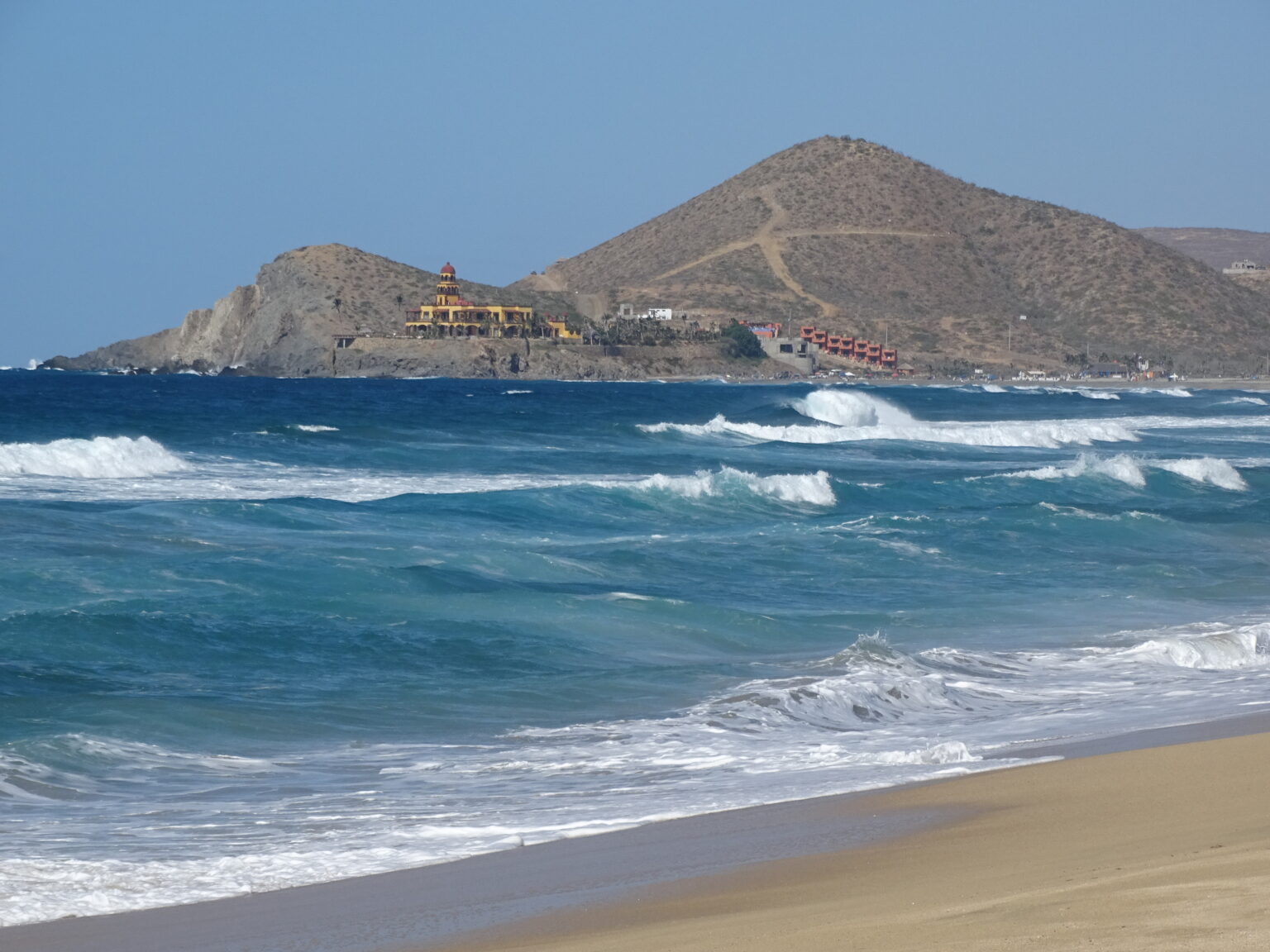
Hero photo: Waves breaking at Cerritos Beach near El Pescadero, Baja California Sur by Adam Jones, CC BY-SA 2.0, via Wikimedia Commons.
Verified November 2026.
The one page brief carries this profile’s snapshot costs and rent, its healthcare frame and, where the profile states one, its advisory note, printed word for word.
No ratings yet. The average appears after 5 ratings, so one score cannot pose as a verdict.
Who’s behind the site
We are Paul and Adriana, and we run My Mexico Move together: Paul from the guides and the platform side, Adriana from Guanajuato, where she leads our partnerships and the ground work behind every profile.


Founder
Paul moved to Guanajuato in 2018 and founded My Mexico Move in 2021. He writes the guides and builds the city profiles, tools and member platform.

Partner, Partnerships and Operations
Adriana Becerra Vaca is Paul’s partner and leads partnerships and operations at My Mexico Move. Based in Guanajuato, she builds the relationships with the Mexican businesses in our directory, reviews our Spanish-language content so it reads the way it should, and runs the Mexico ground work our guides and city profiles depend on. A broadcaster by trade, she presented on Exa FM Irapuato and has worked as a commercial voice talent since 2017. Her studio, Voice con Vida, produces the audio across our sites.
Say hello any time, or write to us through the contact page.