
Paul Green
Founder
Paul moved to Guanajuato in 2018 and founded My Mexico Move in 2021. He writes the guides and builds the city profiles, tools and member platform.
City profile · Colima
A whitewashed Pueblo Magico 10 minutes from Colima City, with volcano views, an artist legacy and the cheapest rents in the state, under a Level 4 advisory.
Verified November 2026
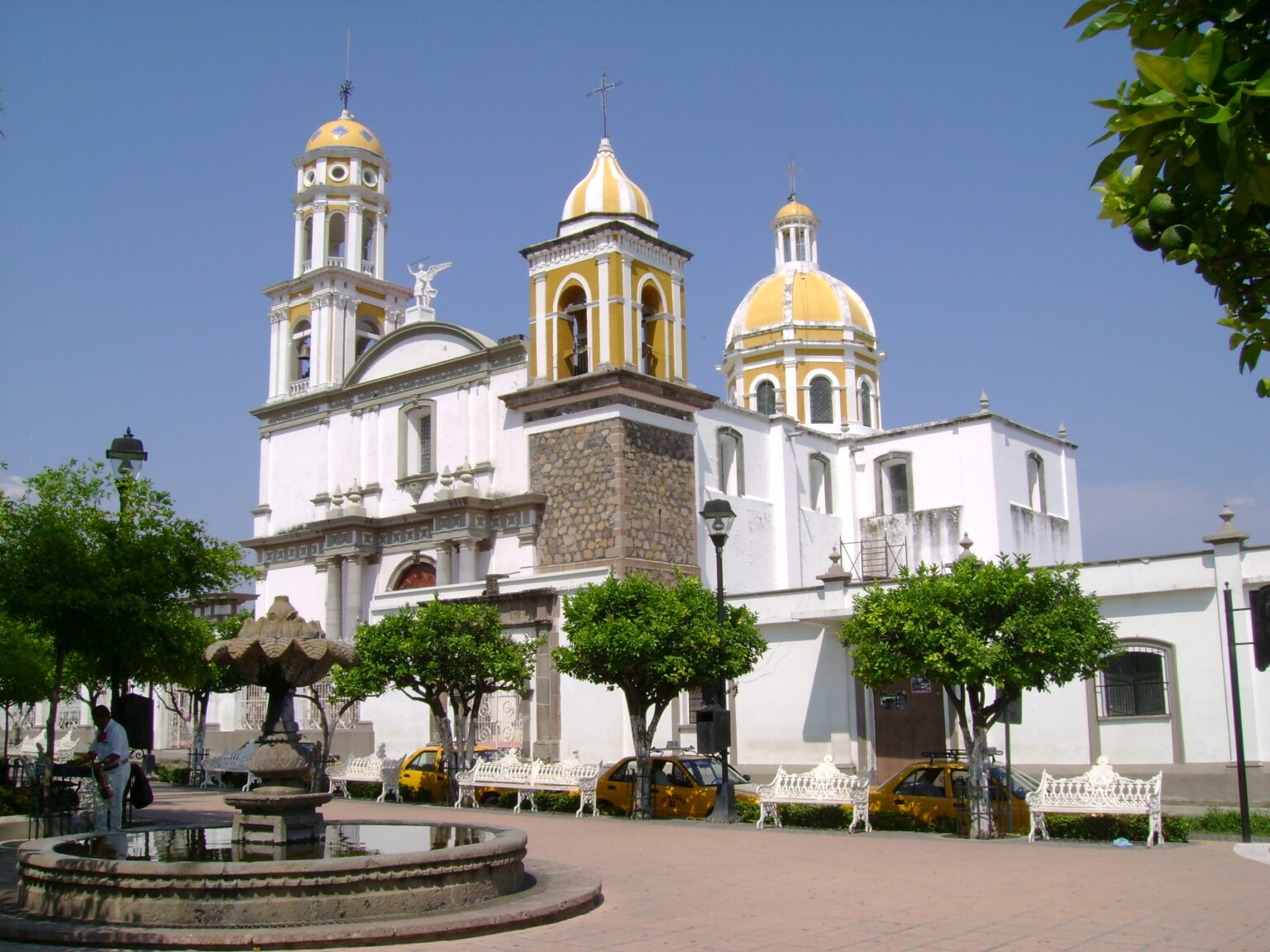
Comala is a whitewashed Pueblo Magico of about 10,000 people in the foothills of the Volcan de Colima, 10 kilometres north of Colima City on Highway 175. Every building in the historic centre is painted white with a red tile roof, a rule in place since 1962 that earned the town its nickname, the White Village of America. It is the prettiest town in the state and the one most visitors remember, and it is also the smallest and quietest place on this site to carry a Level 4 advisory. Read the advisory note below first, because it shapes everything else on this page.
Travel advisory: The state of Colima is at Level 4 (Do Not Travel) in the US State Department Mexico advisory dated 11 August 2026. US government employees may travel only to the listed tourist and port areas of Manzanillo and may not travel to other areas in the state of Colima, which includes Comala. The full picture, including what that level does and does not mean for a town like this, is in the Safety section below.
The town itself is small enough to cross on foot in minutes. The 2010 census counted 9,442 people in the town and 20,888 in the municipality, which covers 254 square kilometres and more than 400 communities. Wikivoyage puts the town at about 10,000 people in 2020. Comala is the municipal seat, the northernmost and second smallest municipality in the state, and its name means place where griddles are made, from the comal clay griddles the area was known for. Before the Spanish it was called Ajuchitlan, the Valley of the Flowers, with indigenous settlements along the water running down from the volcano.
What makes Comala different from the other small towns on this site is that it is two things at once: a working agricultural town in the coffee belt at the foot of an active volcano, and a literary and artistic landmark. Juan Rulfo's novel Pedro Paramo is associated with Comala, although it is not known whether Rulfo was referring to this town directly, and a bronze statue of Rulfo sits on a bench in the central garden reading to a child. The artist Alejandro Rangel Hidalgo (1923-2000) lived at the Nogueras hacienda just outside town, designed the iron benches in the plaza, and left a museum, an eco-park and a whole style, Rangeliano, that still shapes how the town looks. Retirees with an artistic bent are the foreigners most likely to fall for Comala, and the town rewards them with beauty, quiet and very low rents. It does not reward anyone who needs a hospital in town, a large English-speaking community, or a place the US government considers safe to visit.
Comala is flat in the centre, compact and easy to learn, and that is most of the transport story. The historic centre is paved with river stone, the streets run in a small grid around the main plaza, and the town is walkable end to end. A car is useful for the volcano slopes, the coffee farms and the villages beyond town, but not essential for daily life in the centre. The road south is Highway 175 to Colima City, 10 kilometres away, and the road north runs through Suchitlan toward the volcano and on into Jalisco.
Getting there is simple. Wikivoyage, updated December 2025, puts a taxi from Colima City at 10 to 15 minutes and about MX$50, and a Colima safety guide reports buses every 15 minutes from Colima, with the advice to return before 18:00. No verified local bus timetable or taxi fare table for Comala itself is published on this page, so treat those figures as reported, not verified, and confirm them on the day. The nearest airport is Colima International Airport (CLQ), reached through Colima City, with flights to Mexico City and Tijuana. Guadalajara is about 210 kilometres north, roughly two and a half hours by road, and Manzanillo is about 115 kilometres to the south-west.
One practical note: the US advisory tells US citizens to follow the same restrictions as US government employees, which include not travelling between cities after dark and using dispatched vehicles from regulated taxi stands or app-based services rather than waving down taxis on the street. In a town this small that mostly means planning the Colima City trip in daylight and ordering the taxi rather than flagging one.
Comala has no formal neighbourhood names that listings agree on, so think in bands, as with the other small towns on this site.
The plaza and the streets around the church. The historic centre, around the Plaza Principal and the Parroquia de San Miguel Arcangel, is where the whitewashed houses, the portales restaurants and the craft shops cluster. The most walkable choice, the best place to live without a car, and the most beautiful part of town. Older houses, some of them Rangeliano in style, with the market and the plaza a short walk away. It is also the most visited part of town, so weekends and festival days are livelier than weekdays.
Nogueras. The former sugar hacienda about 2 kilometres from the centre, now the Centro Cultural Nogueras with the Alejandro Rangel Hidalgo museum and an eco-park. A pleasant 20-minute walk from the centre along the road, and the greenest, quietest edge of town. More a destination than a residential neighbourhood, but houses on this side of town get the walk to the hacienda gardens as a daily routine.
Real de Comala and Bielva Residencial. The newer subdivisions that appear in the rental listings, with modern single-storey houses, roof gardens and walled lots. The cheapest long-term rentals in the listings sit here, and the trade is distance from the plaza and a newer, less characterful street. The practical choice for a renter who wants a modern house at a low price and does not mind a short walk or drive into the centre.
The road north to Suchitlan and the volcano slopes. The air cools and the vegetation thickens as the road climbs toward the volcano. Suchitlan, about 10 to 15 minutes away, is a separate Nahua village known for wooden masks and basketry, and the slopes beyond it hold coffee farms and the national park. The trade is distance from services and a wetter climate in the rainy season. The foothill lanes are the choice for someone who wants views, gardens and quiet, and accepts that Colima City is a drive away for anything serious.
No verified per-neighbourhood rent table is published on this page. The honest way to choose is a scouting stay: a week near the plaza and a week on the northern edge will tell you more than any rent table could, and you should walk any prospective street in the rain before committing.
Daily shopping in Comala is small-scale. The town has a modest municipal market, small grocery stores, bakeries selling the local picon bread, and the craft shops around the plaza. Craft markets run in the square on Sundays and Mondays, and the Suchitlan workshops sell masks, baskets and leather chairs direct. For the big shop, residents go to Colima City, 10 kilometres away, where Mercado Obregon in the centre is listed as open 6:00 am to 4:00 pm daily, alongside the supermarkets.
The market that matters most here is not a building but a habit: the portales. The four restaurants under the southern arcade of the plaza compete by bringing free botanas, small plates of snacks, dips and tacos, with every round of drinks, from noon until about 6 pm. Don Comalon on the plaza is the original. It is the cheapest way to eat in town and the centre of Comala social life, and it is covered properly in the Food section below.
Coffee is the other market story. Comala sits in the Mexican coffee belt, and the volcanic soil around the town grows coffee with a reputation for rich flavour. The Coffee Route runs from the town out to plantations in the foothills, including Cafe La Yerbabuena, a family plantation with a small coffee shop. Buying coffee at the plantation and bread at the bakery is the local version of the weekly shop.
There is no large English-speaking enclave in Comala, and no verified count of foreign residents in the town itself, so this section is honest about what the evidence does and does not show. What is verified is state-level: ExpatFever writes that the state of Colima has several small but vibrant expat communities, many Canadians and Americans living there because the climate is relatively temperate and it is affordable on a fixed income, and that most of that presence sits in Manzanillo and smaller coastal and mountain communities rather than the capital. Comala is one of those smaller mountain communities, and the foreigners who do settle here tend to be the quiet, self-sufficient kind rather than the club-joining kind.
The clearest evidence of a foreign presence is the art scene. The Rangel Hidalgo legacy draws artists and craftspeople, and the town has working galleries and studios, including Tao Studio Gallery on Calle Progreso, a laboratory gallery working with Mexican master artisans in stone, metal, wood and fibre, and Gato Rojo Bazar, an art and craft market on Emiliano Zapata. In August 2026 the Endemica Comala gallery showed a Gyotaku exhibition by artist Heather Fortner, presented by Sarah Vazquez, with visitors describing the work as connecting people and nature. A Canadian couple who moved to the area five years ago describe themselves in a travel review as avid hikers who spent a year guiding people around the area for a local charity, which is the shape of foreign life here: hiking the volcano slopes, volunteering, and living quietly rather than gathering in a bar.
English is not widely spoken outside the art and tourism world, and daily life runs in Spanish: the market, the bus, the landlord and the portal restaurants all run in Spanish. Comala is the sister town to Colima City, 10 kilometres south: the capital for hospitals, shopping, the university and the airport, and Comala for the whitewashed plaza, the volcano views and the quiet. The two belong in the same breath, and anyone considering Comala should read the Colima City profile alongside this one.
Rents below are realistic 2026 ranges for decent long-term rentals in Comala, built from live listings checked November 2026. Dollar conversions use 18.62 pesos to the dollar, the Banxico closing rate of 11 November 2026. Expect wide variation by size and furnishing: the listings run from small modern houses in the subdivisions to hacienda-scale properties with hundreds of square metres of land, and the top of the range is not a normal rental.
Small house, long-term. About $540 to $810 a month. Rentola listed 13 to 16 long-term rentals in Comala in November 2026, with small-house examples at MXN 10,000 a month for a 110 square metre house, MXN 11,000 for a 122 square metre new house in Real de Comala, and MXN 15,000 for a 191 square metre house with a roof garden in Real de Comala, with a one-year minimum contract, proof of income and a guarantor with property in Colima. Treat the range as an estimate built from a live listing sample, not a verified market range.
Two bedrooms and larger houses. About $930 to $1,880 a month for long-term. Rentola examples include houses at MXN 17,400 and MXN 35,000 a month, and a 508 square metre house at Hacienda La Canada at MXN 40,000 a month. Hacienda-scale properties run higher still, to MXN 49,000 and MXN 53,000 a month for 450 to 579 square metre houses, about $2,630 to $2,850, which is not a normal rental budget and is noted here so the top of the listings does not mislead.
Costs on top of rent. Rentola advises budgeting extra costs of MXN 2,500 to 6,000 a month on top of rent for a house, and 2 to 3 months rent to cover the initial costs of a move, including the deposit and the legal policy many landlords require. Long-term rentals here move through listings, local agents and word of mouth, and some properties are never formally listed online. Budget a scouting stay and search on the ground, and do not sign a lease from abroad. Check the water and the internet on the specific street, ask what the rent includes, and confirm the guarantor requirement before you fall in love with a house.
No verified current purchase-price range or price per square metre is published on this page, because no reliable market-wide source exists for Comala. What the evidence does show is the shape of the market: whitewashed historic houses around the plaza, some of them Rangeliano in style, modern houses in the Real de Comala and Bielva Residencial subdivisions, and large hacienda-scale properties on the edges of town with land measured in hundreds of square metres. Rent first, for at least a year and through a rainy season, and buy only after you know which street, which slope and which water supply you can live with.
Two checks matter more than any price. First, the town sits at the foot of an active volcano, so a property on the northern slopes needs its volcanic risk, its access road and its insurance position checked before you buy, not after. Second, get an independent notario and an independent lawyer, and check the property is not ejido land. No claim is made on this page about fideicomiso or restricted-zone treatment for a specific property; buyers are directed to an independent notario for that question. A house in a hot, humid, storm-exposed foothill town needs ongoing maintenance against damp and rain, and a whitewashed facade needs repainting on a regular cycle, which is part of the cost of the look that makes the town famous.
Day-to-day healthcare in Comala is basic, and that sentence needs its second half: serious care leaves the town. Comala has local clinics and pharmacies for routine needs, but no hospital is verified in the town itself, and no verified clinic list, English-speaking doctor list or private consultation prices are published on this page, so do not plan your care around any of them. If you have a major ongoing condition that needs frequent specialist care, that travel belongs in your decision, not in a footnote.
Colima City, 10 kilometres and about 15 to 20 minutes away, is the hospital base. The names residents use are the Hospital Regional Universitario de Colima, the public regional hospital on Boulevard Camino Real, the IMSS Hospital General de Zona No. 1 on Avenida Lapislazuli 250 in Villa de Alvarez, the private Hospital Colima on Calle Ignacio Sandoval 1801, and the private Centro Medico de Colima on Avenida Maclovio Herrera 140, which the UK government medical facilities list notes has English-speaking staff. We have not verified English-language service or insurer billing at any of them, so confirm those in person. In an emergency, dial 911.
Two gaps matter. First, no IMSS facility is verified in Comala itself, so public care means Colima City, and the IMSS-Bienestar transition in May 2026 left foreign-resident access unclear, so confirm local access before relying on it. Second, IMSS voluntary enrolment is available to legal residents and is the cheapest backstop in the country, but it has waiting periods and pre-existing condition exclusions, so read the current rules before you rely on it. Private insurance bought locally is the usual complement for people who want faster access. Most residents here run a hybrid: local clinics and pharmacies for routine needs, Colima City for everything serious, and IMSS or private insurance as the financial backstop.
| Facility | Type | What the profile says |
|---|---|---|
| Local clinics and pharmacies, Comala | Private, local | Basic care reported; no verified list |
| Hospital Regional Universitario de Colima | Public | Regional hospital in Colima City, about 15 to 20 minutes away |
| IMSS Hospital General de Zona No. 1, Villa de Alvarez | Public | IMSS general hospital, Avenida Lapislazuli 250 |
| Hospital Colima | Private | Private hospital in Colima City, Calle Ignacio Sandoval 1801 |
| Centro Medico de Colima | Private | Private hospital in Colima City, English-speaking staff noted by the UK list |
Comala suits a retiree who wants beauty, quiet and low costs above almost everything else and is honest about the trade-offs. The maths works: the estimated single-person budget on this page is $950 to $1,500 a month, and the verified 2026 average Social Security benefit is $2,071 a month (Social Security Administration, 2026 COLA Fact Sheet), so a single retiree on the average benefit covers a modest Comala life, and a couple on two benefits lives comfortably. The plaza is a short walk away, the climate is milder than the capital because of the 600 metre elevation, and Colima City is 10 kilometres away for hospitals, shopping and flights.
The trade-offs for retirees are the ones named across this profile: the Level 4 advisory, which is the first thing to weigh and the reason this profile carries a disclaimer at the top; routine healthcare in the town but serious care a trip away; a small foreign community, so the social world runs in Spanish; and a volcano that is active, monitored and visible from the plaza. It is a poor fit for a retiree who needs frequent specialist care, a large English-speaking peer community, or a place their government considers safe to visit. It is a strong fit for an artsy, independent retiree who speaks some Spanish, loves walking, coffee, craft and quiet, and has weighed the advisory with open eyes. Come for a month in the rainy season, not only in the mild dry months, live through a week without a car, and check whether 15 minutes to a hospital feels close enough for your health situation.
Remote workers can do fine here, with two caveats: no internet speed or price by street is verified for this profile, so test the actual speed in the exact property before you sign a lease, and the town is small, so a power cut or an outage hits harder than it would in a city. No coworking venue is verified by name for this profile, so do not plan your work life around one. Remote workers here work from home or from cafes, and the town suits people whose work is already remote and portable.
Local work for foreigners is a different question: you need residency with permission to work, and the local job market is agriculture, coffee, tourism and crafts, with pay far below US levels. Teaching English is the usual foreigner option, and it pays local rates. Some foreign residents run small businesses in the wider area, including galleries, studios and guest houses, but that is self-employment with permits, not a job market. Nobody moves to Comala for a local salary.
Comala is a family-friendly small town, not a family-relocation hub for foreigners, and the honest picture for families is mixed. For children, daily life is safe in the usual small-town sense, with the plaza, the kiosk, the Nogueras eco-park with its medicinal plants and fruit trees, the Suchitlan craft workshops, and the volcano national park all within easy reach. The social world tilts local and Spanish-speaking, not international, and no verified list of family facilities, clubs or activities for foreign children is published here. If schooling is a deciding factor, verify specific schools on the ground before committing, and weigh Colima City, 10 kilometres away, which has the university and the larger schools.
We have not verified the names, fees or admissions of schools in Comala, so families should check that in person before committing: the town has local schools, but no international school is verified here. The nearest larger schooling is in Colima City, 10 kilometres away. No international or bilingual K-12 school is verified by name in Colima City either, and no Spanish immersion school is verified by name, so this page names none. The nearest university is the Universidad de Colima, founded in 1942, in Colima City. Numbeo lists an international primary school in Colima City at $2,483.82 a year, but that figure comes from a thin sample of 9 contributors in 18 months, some data estimated, and it is quoted here as a Colima City figure with that caveat, not as a verified Comala option. For a family move, the school decision and the housing decision are the same decision: price the Colima City school run, in time and in fees, before you sign a lease in Comala.
Comala eats from the portal restaurants, the bakery and the coffee farms, and it eats both cheaply and well if you eat like a resident. The signature habit is botanear: order a drink at one of the four restaurants under the southern portal of the plaza, and the botanas keep coming, small plates of snacks, dips and tacos, free with drinks from noon until about 6 pm. Don Comalon on the plaza is the original, and the four restaurants compete by outdoing each other on the plates. It is the cheapest way to eat in town, the centre of Comala social life, and the reason a solo diner ends up chatting with neighbours.
The local table is tatemado, antojitos for snacking, and the picon bread of the town, which leaves a taste of burnt sugar and is made to go with the local coffee. The drinks are the point: ponche, made with spirits and local fruit in flavours including pomegranate, blackberry, tamarind, coconut, coffee, guayabilla, prune and peanut, plus bate, a chan seed drink served fresh with honey and piloncillo, tuba, the palm sap drink, and tejuino, made with corn dough and piloncillo. Coffee is grown in the volcanic soil around the town, and the Coffee Route out to the plantations is the food trip to take. The big shop is in Colima City, where Mercado Obregon and the supermarkets cover everything the town shops do not.
Comala's nightlife is the plaza, and outside festival days it is quiet. Evenings centre on the portales, where the botanas restaurants fill up in the late afternoon, mariachi bands compete for business, and tables stay full into the evening. Most places wind down early, and the town gets quiet after the evening crowd heads home. Colima City adds bars and the Andador Constitucion, 10 kilometres away. If you want a drink with a view of a whitewashed plaza and an early night, Comala suits you. If you want a late bar scene within walking distance, it does not, and no listing will change that.
This is the section to read before you rent on the northern slopes. Comala sits at the foot of the Volcan de Colima, also called the Volcan de Fuego, an active volcano 3,825 metres high, with its taller, inactive twin, the Nevado de Colima at 4,271 metres, beside it. The volcano is visible from the town, and the twin peaks dominate the local landscape. The last major eruptions of the Volcan de Colima occurred in 1998 and 1999, and it is one of the most monitored volcanoes in Latin America. That monitoring is reassuring and it is not a guarantee: check the current volcanic activity and any access restrictions before hiking the slopes or renting high on the northern edge, and ask residents what the last ashfall did to roofs and cars.
Climate on this edge of the state is milder than the capital because of the elevation. The town sits at about 600 metres, and the state article notes the mildest climates in Colima are in the Comala and Cuauhtemoc municipalities. Wikipedia gives the municipality an average temperature varying between 23 degrees C in January and 27 degrees C in June, with most rain falling from May until September. WeatherSpark gives a typical range of 55 to 90 degrees F across the year, with the hottest month May at an average high of 90 degrees F, the coldest month January at an average low of 55 degrees F, the wettest month September at about 6.4 inches of rain and the driest month April at about 0.0 inches. The dry season runs roughly November to May and the wet season from June to October, and the northern slopes are wetter than the town centre in the rains.
Colima is at Level 4 (Do Not Travel) in the US State Department Mexico advisory dated 11 August 2026, verified November 2026. The advisory says do not travel to the state of Colima due to terrorism, crime and kidnapping. It states that there is a risk of violence in the state from terrorist groups, cartels, gangs and criminal organizations, that most homicides are targeted assassinations against members of criminal organizations, that shooting incidents between criminal groups have injured or killed bystanders, and that US citizens and lawful permanent residents have been victims of kidnapping. US government employees may travel only to the listed central tourist and port areas of Manzanillo, on set routes, and may not travel to other areas in the state of Colima. Comala is in that excluded area: there is no carve-out for the town, and the carve-outs that cover Manzanillo do not cover a trip inland to Comala or Colima City. Read the current advisory before you commit, and check it again before any trip.
The honest neighbourhood read: the state of Colima has the highest murder rate per capita in Mexico, linked to the contest over its ports, and Colima City was ranked the murder capital of the world in 2022 with a homicide rate of 182 per 100,000. The UK advises against all but essential travel to most of Colima, with an exception for Manzanillo. Against that, a Colima safety guide describes Comala itself as a daytime trip, with heavy tourist flow and police presence, buses every 15 minutes from Colima, and advice to return before 18:00. Both things can be true at once: a quiet whitewashed plaza by day, and a state the US government tells its own employees not to enter beyond Manzanillo. No city page can call a Level 4 state safe, and this one does not. No verified Comala-only crime rate is published on this page, so no town crime figure is stated here.
Practical advice follows from the advisory itself: travel between cities in daylight only, use dispatched vehicles from regulated taxi stands or app-based services rather than waving down taxis, avoid travelling alone in remote areas, and keep a charged phone and drinking water in the house. The volcano is the other safety question: it is active and monitored, so check the current activity before hiking the slopes, and treat ashfall as a real possibility on the northern edge of town.
A modest but comfortable single life in Comala runs about $950 to $1,500 USD a month; a comfortable couple, about $1,400 to $2,100. Both are estimates, built from the rows below, not verified ranges, because Comala has almost no published cost data of its own beyond the rental listings. The shape of it: rent as above; utilities are cheap in a mild month; groceries split between the town shops and the Colima City markets; dining out ranges from free botanas with a drink at the portales to a full meal in Colima City. Transport can be nearly free if you walk and take the bus, and most town residents do. The leaks are the usual ones: imported goods, private health insurance premiums, and travel back to the States.
| Item | Figure | Basis |
|---|---|---|
| Monthly total, one person | $950–$1,500 | One person, modest but comfortable, estimate |
| Monthly total, a couple | $1,400–$2,100 | A couple, comfortable, estimate |
| Rent, small house, long-term | $540–$810 | Per month, Rentola listings November 2026, MXN 10,000 to 15,000 |
| Rent, larger house | $930–$1,880 | Per month, Rentola listings November 2026, MXN 17,400 to 35,000 |
| Utilities | $30–$80 | Per month, estimate; Numbeo Colima City utilities $64.51 |
| Internet | About $25 | Per month, estimate; not verified for Comala specifically |
| Groceries | $200–$300 | Per month, one person, estimate |
| Eating out | $50–$100 | Per month, estimate; botanas are free with drinks at the portales |
| Local transport | $30–$60 | Per month, estimate; bus and taxi; a car adds fuel, insurance and upkeep |
| Health, routine private visits and pharmacy | $30–$70 | Per month, estimate; IMSS enrolment is separate and varies |
| Miscellaneous | $40–$80 | Per month, estimate |
You will thrive if you want a beautiful whitewashed town at very low prices, you are artistic, independent and comfortable in Spanish, your health is stable, and you have weighed the Level 4 advisory with open eyes and decided the town is worth it anyway. Comala's foreign scene is small and artsy rather than large and organised, and you will make Mexican friends because daily life runs in Spanish. Compare Colima City, 10 kilometres south, if you want the same state with a capital city, a cathedral square and the hospitals in town, or Manzanillo, about 115 kilometres away, if you want the same state with a coast, a port and the only part of Colima the US advisory carves out.
You will struggle if you need frequent specialist care, a large English-speaking community, a mild climate with no volcano on the horizon, or a place your government considers safe to visit. The rainy season is wet on the northern slopes, the social scene runs in Spanish, and the advisory is the first thing any honest profile has to say. The market, the bus, the bank and the landlord all run in Spanish, and there is no expat bubble to hide in. Check the volcano activity, the water and the internet on any street before you sign.
Comala is the prettiest town in Colima and the cheapest honest landing in the state, and the honesty is the point. It does not pretend to be a resort, a colonial jewel with a soft landing, or a place the US government considers safe. It is a whitewashed Pueblo Magico at the foot of an active volcano, with a plaza where the botanas are free with a drink, a coffee belt in the foothills, an artist's museum in a sugar hacienda, and rents from about $540 a month. The price of that bargain is Spanish, patience, a trip to Colima City for serious medical care, and a Level 4 advisory you must weigh before anything else. Come for a month in the rainy season, not only in the mild dry months, walk the plaza at dusk, and check whether 15 minutes to a hospital feels close enough for your health situation. If the town gets its hooks in you the way it does for the artists and hikers who stay, you will understand everything in this profile from the inside.
Disclosure Affiliate link: if you buy or book through it, we may earn a commission at no extra cost to you. The full disclosure
Population and geography are from Wikipedia (Comala, town and municipality in the state of Colima, northernmost and second smallest municipality behind Villa de Alvarez; town 9,442 and municipality 20,888 in the 2010 census; municipality 254 square kilometres and more than 400 communities; elevation 600 metres; average temperature 23 degrees C in January to 27 degrees C in June, most rain May to September; historic centre declared a Historic Monument Zone and Pueblo Magico in 2002; Pedro Paramo association with the note that it is not known if Rulfo referred to the town directly), checked November 2026. Distances are from Wikivoyage (Comala, town of 10,000 in 2020, taxi 10 to 15 minutes and about MX$50 from Colima City, updated December 2025) and Mexico Travel and Leisure (Colima City 10 km on Highway 175, Guadalajara 210 km, Manzanillo 115 km, average temperature 25 degrees C, updated 23 February 2026). The white paint rule since 1962, the White Village of America nickname, the Rulfo bench statue, Nogueras at 2 km, Rangel Hidalgo 1923 to 2000 and the Rangeliano style are from Wikipedia, Mexico Travel and Leisure and MexicoCassie (January 2026). The advisory level is from the US State Department Mexico advisory dated 11 August 2026, fetched live at travel.state.gov on 13 November 2026 (crawled 20:53 UTC, date line at line 815): Colima is at Level 4 in the Level 4 section, do not travel due to terrorism, crime and kidnapping, with US government employees limited to the listed Manzanillo areas and barred from other areas in the state. Safety context is from the Colima City profile on this site (state highest murder rate per capita; 2022 murder capital ranking, homicide rate 182 per 100,000; UK advice against all but essential travel to most of Colima except Manzanillo) and a Colima safety guide (Comala as a daytime trip, buses every 15 minutes, return before 18:00). The volcano is from the Colima state article (Volcan de Colima 3,825 metres, active; Nevado de Colima 4,271 metres, inactive; last major eruptions 1998 and 1999). Climate figures are from Wikipedia and WeatherSpark (typical range 55 to 90 degrees F; May average high 90 degrees F; January average low 55 degrees F; wettest September about 6.4 inches; driest April about 0.0 inches; 1980 to 2016 data). Rents are from Rentola long-term listings checked November 2026 (13 to 16 listings; small houses MXN 10,000 for 110 square metres, MXN 11,000 for 122 square metres in Real de Comala, MXN 15,000 for 191 square metres with roof garden and one-year minimum; larger houses MXN 17,400, 35,000 and 40,000; hacienda-scale MXN 49,000 and 53,000; extra costs MXN 2,500 to 6,000 a month and 2 to 3 months rent in initial costs). The dollar conversion uses 18.62 pesos to the dollar, the Banxico closing rate of 11 November 2026. Expat life is from ExpatFever (state-level small but vibrant expat communities, many Canadians and Americans, temperate climate, affordable on a fixed income), Tao Studio Gallery (Calle Progreso 53, Comala), Gato Rojo Bazar (Emiliano Zapata 42, Comala) and an August 2026 Gyotaku exhibition at Endemica Comala. Food and markets are from MexicGo (botanas free with drinks noon to about 6 pm, four portal restaurants, Sunday and Monday craft markets, ponche flavours, picon bread, Suchitlan masks and baskets 10 minutes away) and MexicoCassie (ponche, Don Comalon, Cafe La Yerbabuena on the Coffee Route). Healthcare is from the Colima City profile on this site (Hospital Regional Universitario de Colima; IMSS Hospital General de Zona No. 1, Avenida Lapislazuli 250, Villa de Alvarez; Hospital Colima, Calle Ignacio Sandoval 1801; Centro Medico de Colima, Avenida Maclovio Herrera 140, English-speaking staff noted by the UK list) and the IMSS-Bienestar transition of May 2026. Schools are from the Colima City profile on this site (Universidad de Colima founded 1942; no international or bilingual K-12 school verified by name) and Numbeo Colima City (international primary $2,483.82 a year; 9 contributors in 18 months, some data estimated; last updated 2 October 2026). The Social Security average of $2,071 a month is from the Social Security Administration 2026 COLA Fact Sheet. The utilities figure of $64.51 is Numbeo Colima City. Figures we could not verify are marked as unverified in the sections above, so you can see exactly what still needs checking on the ground.
Keep planning: price your month in our cost calculator, compare cities side by side on the city comparison page, read our safety and healthcare guides, or take the city match quiz.
Hero photo: Main plaza and church in Comala, Colima by Yaomautzin Ohtokani Olvera Lara, CC BY-SA 3.0, via Wikimedia Commons.
Verified November 2026.
The one page brief carries this profile’s snapshot costs and rent, its healthcare frame and, where the profile states one, its advisory note, printed word for word.
No ratings yet. The average appears after 5 ratings, so one score cannot pose as a verdict. To rate this city profile, leave a comment below and pick your stars in the comment form. First comments are held for a quick moderation check before they appear.
Corrections and first-hand tips are welcome. Keep comments on topic and kind, and please do not share personal immigration case details here. Read the Comment Policy before posting.
Who’s behind the site
We are Paul and Adriana, and we run My Mexico Move together: Paul from the guides and the platform side, Adriana from Guanajuato, where she leads our partnerships and the ground work behind every profile.
Founder
Paul moved to Guanajuato in 2018 and founded My Mexico Move in 2021. He writes the guides and builds the city profiles, tools and member platform.
Partner
Adriana Vaca is Paul’s partner and leads partnerships and operations at My Mexico Move. Based in Guanajuato, she builds the relationships with the Mexican businesses in our directory, reviews our Spanish-language content so it reads the way it should, and runs the Mexico ground work our guides and city profiles depend on. A broadcaster by trade, she presented on Exa FM Irapuato and has worked as a commercial voice talent since 2017. Her studio, Voice con Vida, produces the audio across our sites.
Say hello any time, or write to us through the contact page.