

Paul Green
Founder
Paul moved to Guanajuato in 2018 and founded My Mexico Move in 2021. He writes the guides and builds the city profiles, tools and member platform.
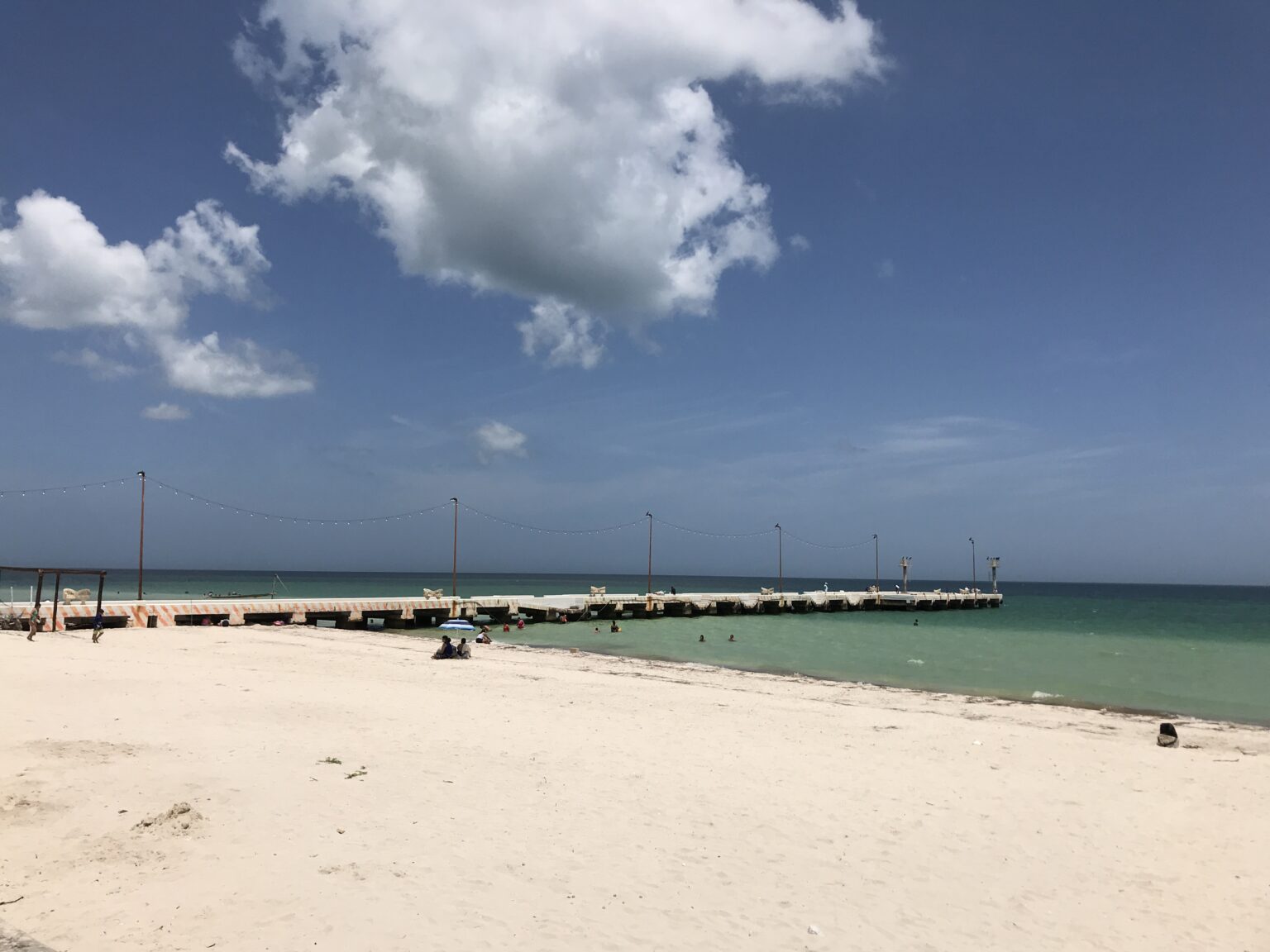
City profile · Yucatan
A quiet fishing village turned condo coast on the Yucatan Emerald Coast, with white sand, flamingos and Merida an hour away.
Verified November 2026
Telchac Puerto is a fishing village of about 2,000 people on the north coast of Yucatan, about 70 kilometres northeast of Merida and about 30 minutes east of Progreso along the coastal road. The 2020 census counted 1,913 people in the town and 1,915 in the municipality (INEGI, via CityPopulation). In the Yucatec Maya language the name means port of rain, or necessary water. The town sits at just 1 metre above sea level on a wide white-sand beach facing the Gulf of Mexico, with a small working harbour, a malecon with a lighthouse, a plaza, and a fishing fleet that still lands sardines, jack crevalle, snook and spotted seatrout.
What makes it different from the rest of the Yucatan coast is the speed of the change. Ten years ago this was a quiet village where North American snowbirds rented beach villas in the low season. Today the beachfront east and west of the old town is a building site of ten-storey condo towers, marina residences and pre-sale developments aimed squarely at foreign buyers and investors, while the village itself still runs on fishing boats, a plaza market and small seafood restaurants. It is the most upscale and the quietest of the Merida beach towns at the same time: luxury towers beside a village with no big supermarket, no hospital and almost no nightlife.
The honest bargain is simple. You get a beautiful, safe-swimming beach, flamingos in the lagoons in season, a Maya ruin 12 kilometres away, and Merida about an hour away, all in the only state on the Gulf coast at Level 1. What you give up is convenience: you need a car, you drive for the big grocery shop and for any serious medical care, and from roughly June to October the town empties out and the heat and humidity take over. If you want a modern beachfront condo in a place that is still a fishing village, Telchac Puerto is the one to look at first. If you want a town with services on tap, look at Progreso instead.
Travel advisory: Yucatan is at Level 1 (Exercise Normal Precautions) in the US State Department Mexico advisory dated 11 August 2026. The full picture, including what that level does and does not mean for Telchac Puerto, is in the Safety section below.
Telchac Puerto is small enough to cross on foot in 10 to 15 minutes. Daily life gathers around the main plaza and the Palacio Municipal, with the malecon and the beach one block north, the lighthouse on the small seaside promenade, and the streets laid out in the usual Yucatan grid of numbered calles. The centre is flat, walkable and quiet, and in the low season it can feel half empty. The beach is the main street in practice: most of the newer housing sits along the beachfront road east and west of the old town, and the distances that matter are along the coast, not across town.
The road that matters most is the coastal road itself. It runs west to Progreso and Merida and east past San Crisanto, Chabihau and Santa Clara toward Dzilam de Bravo, a two-lane road with an 80 to 100 km/h limit, speed bumps in the villages and conditions that vary from smooth to potholed. The drive to Merida takes about 1 hour to 1 hour 10 minutes for the 72 kilometres, and Progreso is about 30 minutes west. Merida airport (MID) is about 65 to 80 minutes away by car. There is no verified direct public bus from Merida to Telchac Puerto published on this page, and no verified Telchac bus timetable, so do not plan to live here without a car unless you have confirmed the current bus or colectivo options on the ground. Autoprogreso runs frequent buses between Merida and Progreso, about every 15 minutes from 05:00 to 22:00, and from Progreso the last stretch to Telchac is a taxi ride of about 30 minutes.
A car is not a convenience here, it is the plan. The big grocery shop, the hospital, the airport, the international school options and most specialist services are all a drive away, and the town has no verified ride-hailing coverage. Budget for a car, its insurance and its maintenance as a fixed cost of living here, and test the coastal road in daylight before you commit to a beachfront address far from the plaza.
Where you land in Telchac Puerto matters, because the town is really three places sharing one beach: the old village, the beachfront strip, and the new towers.
Centro and the malecon. The streets around the plaza, the Palacio Municipal, the church of San Diego de Alcala and the malecon. The most walkable choice, the best place to live without a car for daily errands, and the noisiest in July and August when the fair fills the plaza, and in November for the patron saint festivities. Older houses, small apartments above shops, and the fishing restaurants along the waterfront. The beach here is the town beach, with the dock (Muelle de Telchac) reaching out into the Gulf.
The beachfront strip, east and west. The road along the sand in both directions from the malecon, where the older beach houses sit behind dunes and coconut palms, and where most of the long-term rental stock is. Quieter than Centro, more spread out, and car dependent for anything beyond the beach. The best beaches for a private stretch of sand are out here, away from the town beach. Beach erosion has been a real issue on this coast, and a reef structure was installed off the beach in August 2021 after the beach had been losing sand for a decade, so ask about the state of the sand in front of any specific property before you sign or buy.
The new condo towers. The high-rise developments rising on the beachfront, including the 10-level Peten D'Arenas tower and the four towers of the KINUH nautical residential development, with pools, gyms, 24-hour security and beach access. The most modern choice, the most expensive, and the most exposed to the questions that come with pre-construction buying: delivery dates, maintenance fees and what the tower looks like when half the units are empty in the low season. Walk the finished common areas, not just the sales renders, before you commit.
Inland streets. The numbered streets south of the beach road, where local families live, rents are lowest and the sea breeze is weaker. A practical choice if you want a low rent and a local street life, and you do not mind driving to the beach. No verified per-neighbourhood rent table is published on this page, and the honest way to choose is a scouting stay: a week in Centro and a week out on the beachfront will tell you more than any rent table could.
Daily shopping in Telchac Puerto covers the basics and not much more. Super Willys on Yucatan 27 is the largest grocery in town, open 07:00 to 22:00 daily, with a bakery, and Dunosusa on Calle 23 and the Six stores cover the same ground at a smaller scale. Fruteria el Mercadito on Calle 20 sells fruit and vegetables wholesale and retail, usually 07:00 to 14:00, and there are tortillerias, bakeries and small abarrotes shops on the residential streets. Fish comes from the harbour and the fishing restaurants, and the plaza vendors sell marquesitas, elotes and esquites in the evenings.
There is no large supermarket in Telchac Puerto, and that is the fact that shapes the weekly routine. The major grocery run means a drive to Progreso, about 30 minutes west, or to Merida, about an hour away, where the large supermarkets and the imported goods are. Imported and North American products cost more and are patchy even in Merida, so most residents cook with what the local shops sell and treat the import aisle as a treat, not a staple. If you do not have a car, the weekly shop becomes a taxi ride or a favour from a neighbour, and that is a real cost of living here.
Telchac Puerto has a small and seasonal foreign presence, and that is the fact that shapes everything else on this page. Yucatan Today describes an expat community of Americans, Canadians and Europeans along this stretch of coast, some of them living there year-round, and a Yucatan beach blog says winter snowbirds, mostly Canadian, rent beach houses here. There is no verified expat population count, no expat club, no English-language meetup and no verified regular foreign gathering published on this page. You will make Mexican friends because you will have to, and your Spanish will improve because daily life requires it.
The seasons set the social calendar. The low season runs roughly January to April, when North American visitors occupy the villas, and the high season is July and August, when families from Merida escape the city heat for the cooler coastal breeze and villa prices roughly double. Outside those months the town is very quiet, and the beachfront houses and condo towers can feel empty. That quiet is exactly what many residents want, and it is also the thing that surprises newcomers who arrive in October expecting a social scene. The nearest place with a larger foreign footprint is Progreso, about 30 minutes west, and Merida, about an hour away, where the expat groups, English-language events and international services are.
English is spoken in some hotels, beach clubs and tourist-facing restaurants, but the market, the bus, the bank and the landlord all run in Spanish. There is no verified English-speaking social hub in Telchac Puerto itself, so do not plan your social life around one.
Rents below are realistic 2026 ranges for decent long-term rentals. Expect variation by furnishing, furnished and short-term places run higher, and how local your search is. Telchac Puerto has two rental markets that barely touch: small local places in the village, and beach houses and new condos priced for snowbirds and investors. Both are real, and the gap between them is the story of this town.
Beach houses. About $550 to $1,500 a month. A Yucatan beach blog puts beach houses at about $550 to $1,500 a month, except in July and August when prices rise, and the town's own Wikipedia page says villa prices roughly double in the summer high season. Treat the range as an estimate built from one blog and the town's seasonal pattern, not a verified market range, and budget for the summer premium if you want July and August.
Small local places. Much cheaper, and much smaller. Rentola lists 101 long-term rentals in Telchac Puerto, checked November 2026, 54 houses and 48 apartments, with asking rents from MXN 1,800 to 150,000 a month. The low end is real but thin: a two-room apartment of 40 square metres on Calle 23 at MXN 1,800 a month (about $97), and a four-room apartment of 180 square metres on Calle 23 at MXN 4,000 (about $215). A one-room house of 120 square metres on Calle 27A lists at MXN 11,000 (about $591), a one-room house of 88 square metres on Calle 24 at MXN 21,500 (about $1,155), and a three-room house of 94 square metres on Calle 23 at MXN 23,000 (about $1,235). Note that Rentola counts rooms, not bedrooms, so compare specific properties rather than budgeting from the room count. The listing-site averages, about MXN 48,844 for houses and MXN 88,273 for apartments, are skewed by a handful of luxury listings and are not useful as a budget guide.
New condos and luxury rentals. The top of the market is a different world. A three-room apartment of 115 square metres on Calle 58 lists at MXN 30,000 a month (about $1,611), a two-room apartment of 111 square metres at MXN 93,500 (about $5,022), and a three-room house of 308 square metres on Calle 21 at MXN 148,000 (about $7,949). These are new-build and luxury beachfront properties, not the local market, and they are the reason the listing-site averages are meaningless here.
Short stays. Airbnb lists about 250 vacation rentals in Telchac Puerto, with nightly prices from about $20 and beachfront rentals from about $40 a night. Casa Hokol, a beachfront rental run by a Czech couple, charges $55 a night in the low season, $65 in the high season from November to March and in July, and $95 at Christmas and Semana Santa. For a scouting stay, a month in a short-term rental in the low season will tell you more about the town than any listing search.
Utilities. Rentola advises budgeting an extra MXN 500 to 1,500 a month on top of rent for utilities, depending on size and use, and electricity is billed by the CFE every two months. In a hot, humid coastal town the air conditioning bill is the number that moves, so a top-floor condo with all-day air conditioning will cost far more to cool than a shaded ground-floor place with a breeze, and a beach house with a pool adds pump and maintenance costs on top.
One warning: listings aimed at foreigners run high, and the best local rentals still move through local Facebook groups, signs in windows and word of mouth. Budget a scouting stay and search on the ground, in Spanish, and do not sign a lease from abroad. Check the state of the beach in front of the property, and ask what the place is like in the low season, before you sign.
Telchac Puerto is the fastest-moving beachfront market on the Yucatan coast, and the most important thing to understand about it is that most of what is for sale is new, pre-construction or recently finished. The town is on the coast, inside Mexico's restricted zone, so a foreign buyer needs a fideicomiso bank trust to hold residential property here, with the federal SRE permit fee at MXN 21,650. That is one more layer than in an inland city, and it is not optional. A notario publico, not a title company, is the legal figure who closes a sale in Mexico, and beachfront property needs extra care.
The named developments tell the story. Peten D'Arenas is a 10-level residential tower with about 40 apartments of 65 to 301 square metres, in one, two and three-bedroom models, 300 metres from the urban area, with sea-view and mangrove-view units. A realtor listing from April 2026 puts its prices from MXN 4.1 million for a 65 square metre apartment to MXN 16.9 million for a penthouse, about $220,000 to $908,000 at 18.62 pesos to the dollar, with the three-bedroom penthouse model listed from MXN 15,430,100, about $829,000. KINUH is a nautical residential destination of four modern towers with three pools, beach access, 24-hour security and CCTV, where a beachfront penthouse with a private pool lists at MXN 15,860,000, about $852,000, and a pre-sale condo at MXN 8,444,797, about $454,000. A three-bedroom, three-and-a-half-bathroom condo called Turena, 259 square metres of construction on 320 square metres of land, lists at MXN 13,950,000, about $749,000. Another beachfront development of 26 apartments, three penthouses and six villas over eight levels lists from MXN 4,678,000, about $251,000. Playales Telchac Residencial, marketed by Grupo GEA as the heart of the New Riviera of Mexico, is selling the same story of flexible payments and resort amenities. A marina with 130 moorings for boats up to 100 feet sits a short distance from the town, and the Hotel Marina Kinuh anchors the nautical end of the market.
Three warnings belong here. First, the delivery dates in the listings keep moving: one development lists delivery in February 2025, another in February 2026, another in autumn 2024, and several units are still listed as pre-sale, so treat any delivery date as a claim to verify, not a fact. Second, no verified market-wide purchase price, no verified resale record and no verified maintenance or HOA fee table is published on this page, so do not budget a purchase from the asking prices alone. Third, the beach itself is part of the investment case and it is not stable: the beach had been losing sand for a decade before a 120-metre reef structure was installed 80 metres offshore in August 2021. Rent first, for at least a year, and buy only after you know which stretch of beach, which tower and which low season you can live with. Get an independent notario, check the property is not ejido land, check the beach in front of it, and budget for the fact that a beachfront property in a hot, humid, hurricane-exposed coastal town needs ongoing maintenance against damp, salt air and storms.
Day-to-day healthcare in Telchac Puerto is basic, and that sentence needs its second half: anything beyond basic leaves town. The named facilities in town cover routine care, family medicine and pharmacy needs. For anything complex, major surgery, cardiac events or complex cancer care, the answer is Merida, about an hour to an hour and 10 minutes away by car. If you have a major ongoing condition that needs frequent specialist care, that drive belongs in your decision, not in a footnote.
The public side runs through IMSS-Bienestar, with the Unidad Medica Rural 50 on Calle 25 between 32 and 34, open Monday to Friday 08:00 to 16:00, and a Centro de Salud y farmacia on Calle 20. Pharmacies in town include Farmacias Bazar on Calle 20, open 07:00 to 23:00 daily, Farmacia Similares on Calle 20, and the Main Street Co-op pharmacy on Calle 23. There is no hospital in Telchac Puerto, and no verified English-speaking doctor or dentist list and no verified private consultation prices are published on this page, so do not plan your care around either. In an emergency, dial 911, and know that emergency services are limited in remote and rural areas. IMSS voluntary enrollment is available to legal residents, and it is the cheapest backstop in the country, but it has waiting periods and pre-existing condition exclusions, so read the current rules before you rely on it. Private insurance bought locally is the usual complement for people who want faster access. Most residents here run a hybrid: local care for routine needs, Merida for the bigger stuff, and IMSS or private insurance as the financial backstop.
| Facility | Type | What the profile says |
|---|---|---|
| IMSS-Bienestar UMR 50 | Public, rural clinic | Calle 25 between 32 and 34; Mon to Fri 08:00 to 16:00 |
| Centro de Salud y farmacia | Public, health centre | Calle 20 337, in town |
| Farmacias Bazar | Pharmacy | Calle 20 101; open 07:00 to 23:00 daily |
| Farmacia Similares | Pharmacy | Calle 20 330, in town |
| Main Street Co-op | Pharmacy | Calle 23, Mon to Fri 08:30 to 16:00, Sat 09:00 to 15:00 |
| Merida hospitals | Private and public, referral | Serious and specialist care, about 1 hour to 1 hour 10 minutes by car |
Telchac Puerto suits a retiree who wants a quiet beach, a modern condo or a beach house, and a Level 1 state, and is honest about the trade-offs. The maths works for the middle of the market: the estimated single-person budget on this page is $1,100 to $2,500 a month, and the verified 2026 average Social Security benefit is $2,071 a month (Social Security Administration, 2026 COLA Fact Sheet), so a single retiree on the average benefit covers a modest Telchac life, and a couple on two benefits lives comfortably, as long as the rent is in the beach-house range and not the luxury condo range. The beach is safe for swimming, with no reefs, rocks, large tides or currents, the malecon gives every evening a destination, and Merida is an hour away for hospitals, shopping and flights.
The trade-offs for retirees are the ones named across this profile: a small and seasonal English-speaking community that will not carry your social life, routine healthcare in town but serious care an hour away, a hot and humid climate with a real hurricane exposure at 1 metre above sea level, and a town that empties out for months of the year. It is a poor fit for a retiree who needs frequent specialist care, a large peer community of fellow retirees, or a mild climate. It is a strong fit for a retiree who is active, curious, speaks or is learning Spanish, wants a modern beachfront home rather than an expat enclave, and is comfortable driving everywhere. Come for a month in the low season, not only in the high season, walk your prospective beach after a storm, and check whether Merida feels close enough for your health situation.
Remote workers can do fine here, with two caveats: no verified internet speed or price by street is published on this page, so test your exact address before you sign a lease, and power and internet blips happen in storms and high winds, so a backup mobile hotspot is cheap insurance. Telmex has a customer service centre in town on Calle 36, which means fixed internet is available, but that is not a speed guarantee for your street. No coworking venue is verified by name for this profile, so do not plan your work life around one. Remote workers here work from home, from a condo with a sea view, or from cafes, and the town suits people whose work is already remote and portable.
Local work for foreigners is a different question: you need residency with permission to work, and the local job market is fishing, tourism, restaurants, real estate sales and property services, with pay far below US levels. Teaching English is the usual foreigner option, and it pays local rates. Nobody moves to Telchac Puerto for a local salary. The real local opportunity is the property market itself, and that is a business to enter with your eyes open, not a job.
Telchac Puerto is a family-oriented Mexican fishing village, not a family-relocation hub for foreigners, and the honest picture for families is mixed. For children, daily life is safe in the usual Mexican-village sense, with a plaza, a park with a children's play area, family evenings on the malecon, and a beach that is safe for swimming, with no reefs, rocks, large tides or currents. The Museo del Mar gives children a small marine museum to visit, the July and August fair fills the plaza with food stalls and rides, and the November festivities for San Diego de Alcala are a town-wide family event. San Crisanto, a short drive east, hosts an annual coconut festival, and San Bruno, further west, is a tiny beach community of about ten permanent residents with a beach club.
But the social world tilts local and Spanish-speaking, not international, and no verified list of family facilities, clubs or activities for foreign children is published here. Schooling is the deciding factor for most families, and the options in town are local public schools, not international ones. If schooling is a deciding factor, verify specific schools on the ground before committing, and weigh Merida, about an hour away, which has the deeper bench of schools and services.
For school-age children, the named public options in town are the Escuela Primaria Santiago Xicotencatl, a primary school on Calle 12, and the Escuela Secundaria Pedro Noh Baron, a secondary school on Calle 14. A CETMAR marine technical school campus, CETMAR 17, is listed in Telchac Puerto. No verified list of curricula, fees or admissions information is published here, and no verified international or bilingual school, and no verified bachillerato option in town, is published here, so visit the schools and ask in Spanish before deciding anything.
The deeper bench is in Merida, about an hour away, where the private, bilingual and international schools are, and in Progreso, about 30 minutes west. Telchac Puerto is a reasonable place to raise a child in Spanish by living it, and a poor place to assume an English-medium school will be waiting. For families who need an international school, the honest answer is a daily drive to Merida, and that drive belongs in the decision.
Telchac Puerto eats seafood from the morning catch, and it eats it cheaply if you eat like a resident. Most of the restaurants specialise in seafood, serving large portions of pescado frito, ceviche and shrimp aguachile, and many set out complimentary botanos such as potato chips with sikil pak, a Yucatecan pumpkin dip, while you wait. A meal at an inexpensive restaurant in Merida runs about MXN 249, about $13 at 18.62 pesos to the dollar (Numbeo, updated 10 November 2026), and Telchac prices for local seafood are in the same spirit, though no Telchac-only restaurant price table is verified on this page.
The named places to know are Bella Mar, a seafood restaurant on the beachfront, El Angelito on the road toward San Crisanto, Club Nautico Tarraya on Calle 23, Capitan Criollo in the plaza, and La Mojarrita de Pepin. Lolas, on Calle 20 by the malecon, is the useful exception for anyone who does not eat seafood, with meat such as arrachera and grilled chicken and vegetarian options. In the plaza in the evenings, the vendors sell marquesitas, the Yucatecan crepe fried on a skillet and stuffed with queso de bola cheese, and elotes and esquites, fresh corn with mayo, chili and lime, with micheladas to drink. The Hotel Marina Kinuh has an excellent restaurant serving elevated Mexican and international food, and the Reef Yucatan, the coast's only all-inclusive hotel, sells day passes for non-guests. Groceries for a household that cooks at home run far lower than in the US, with the usual leaks: imported wine, peanut butter, and anything that has to be shipped in. Cook from the local shops most days, eat out often because it is cheap enough to, and save the white-tablecloth nights for Merida.
Telchac Puerto's nightlife is quiet and local, not resort energy. Evenings centre on the malecon and the main square, with people sitting out, cafes staying open, seafood restaurants serving dinner, and families strolling after dark. The plaza vendors sell micheladas as the sun goes down, and the beach clubs and hotel restaurants stay open later than the village. The loudest weeks of the year are the July and August fair in the plaza, with food booths, knick-knacks and mechanical rides, and the November festivities for San Diego de Alcala, the town's patron saint.
No bar or club is verified by name for this profile, so do not plan your social life around one. Most places wind down well before the small hours, and outside the high season the centre gets quiet after the evening crowd heads home. What Telchac Puerto offers instead is a nightly culture of people sitting out by the sea, which is a different and, for many residents, better thing. If you want a big-city bar scene, Progreso is the weekend answer, about 30 minutes west, and Merida is an hour away.
The coast is the reason Telchac Puerto exists, and it still sets the rhythm of the town. The beach is part of the Ruta Esmeralda, the Emerald Coast that runs from Progreso in the west to Dzilam de Bravo and El Cuyo in the east, a 98-kilometre stretch of white sand, coconut groves and translucent water. The town's beach is safe for swimming, with no reefs, rocks, large tides or currents, and the harbour is one of only a handful on this coast, shared with Celestun, Sisal, Progreso, San Crisanto and Rio Lagartos. On the malecon you will find the lighthouse, a large shark sculpture, flamingo statues and the big painted letters spelling out the town's name.
The flamingos are the coast's signature sight, and they are seasonal. Between December and April, flocks of flamingos migrate along the coast from Celestun to El Cuyo, and you can see them in the water or flying overhead around Telchac Puerto. The best-known spot is Laguna Rosada, the pink lake on the road to the Xcambo ruins, where the water turns cotton-candy pink from the red brine shrimp and algae, though the colour depends on the water, the light and the time of day, and much of the water sits inside a private salt complex that charges about MXN 20 a person to enter. The flamingos mostly overwinter in the Celestun reserve from November to March, with the largest flocks between December and February, then disperse eastward in mid-March toward their breeding grounds around Rio Lagartos in April and May. Just outside town, the Sayachaltun nature reserve is a newer project run by a collective of 26 fishermen from Telchac Puerto, offering kayak and boat tours through the mangroves to see birds, crocodiles and hidden springs, and to try the mineralised mud the ancient Maya used. The Hotel Marina Kinuh overlooks the reserve on its south side, where herons feed and flamingos fly overhead.
Twelve kilometres from town along the coastal road are the Xcambo ruins, the remains of an ancient Maya city from about 250 to 600 AD, abandoned between 600 and 900 AD, once an important trading port that harvested salt from the nearby lakes to trade across the peninsula. You can climb to the top of the pyramids for the view over the jungle canopy, and a small church built from the ruins' stones stands in the middle of the complex. Across from the site is the Cenote Saya Bak, currently temporarily closed to the public. The Museo del Mar in town holds a large collection of marine fossils, sea snails and shells from the region, with photographs of the town after hurricanes Gilberto and Isidoro, a reminder that this coast has been hit before. Telchac Puerto's climate is warm and humid, with mean daily highs of 28 to 34 degrees C and lows of 19 to 23 degrees C, about 600 mm of rain a year, the wettest in September at about 120 mm, and a dry season from December to May (Weatherbase data via Wikipedia).
Yucatan is at Level 1 (Exercise Normal Precautions) in the US State Department Mexico advisory dated 11 August 2026, verified November 2026. The advisory says to exercise normal precautions in Yucatan, that there is a risk of violence in the state from terrorist groups, cartels, gangs and criminal organizations, and that there are no specific travel restrictions on travel for US government employees in Yucatan state. The advisory also says US government employees may not travel between cities after dark, and US citizens are strongly advised to follow the same restrictions. Read the current advisory before you commit, and check it again before any trip.
Level 1 is the lowest advisory level, and Yucatan is one of only two states at that level, alongside Campeche. That is a real differentiator for this coast, and it is part of why the condo towers are rising here. It is not a guarantee. The honest neighbourhood read: the town centre and the beachfront are quiet, well walked in the evenings and low-key, and the risks there are the usual small-town ones, opportunistic theft, drink spiking in bars and scams aimed at visitors. No verified Telchac Puerto-only crime rate is published on this page, so no town homicide figure is stated here. Do not walk alone in unlit streets late at night, do not flash cash or jewelry, and do not travel between cities after dark.
The other safety question is the sea and the sky. The town sits at 1 metre above sea level, the beach has been losing sand for a decade, and the Museo del Mar keeps photographs of the damage from hurricanes Gilberto and Isidoro. Hurricane season runs roughly June to November, and a storm surge is the risk that matters most for a beachfront address, not wind alone. Ask about the storm history of the specific property, check whether the building has storm shutters and a generator, and know your evacuation route to Merida before the season starts. In an emergency, dial 911.
A modest but comfortable single life in Telchac Puerto runs about $1,100 to $2,500 USD a month; a comfortable couple, about $1,300 to $2,800. Both are estimates, built from the rows below, not verified ranges, because Telchac Puerto has almost no published cost data of its own. The shape of it: rent dominates, and the range is wide because the town has two rental markets; utilities are cheap in a mild month but air conditioning adds up fast in the hot season; groceries split between the local shops and the big Merida run; dining out ranges from market snacks to the beachfront restaurants. Transport is a fixed cost here, because the car is not optional. The leaks are the usual ones: imported goods, private health insurance premiums, air conditioning, pool maintenance, and travel back to the States.
| Item | Figure | Basis |
|---|---|---|
| Monthly total, one person | $1,100–$2,500 | One person, modest but comfortable, estimate |
| Monthly total, a couple | $1,300–$2,800 | A couple, comfortable, estimate |
| Rent, beach house | $550–$1,500 | Per month, Yucatan beach blog range, except July and August |
| Utilities | $50–$150 | Per month, estimate; Rentola advises MXN 500 to 1,500 extra a month |
| Internet | About $25 | Per month, estimate; not verified for Telchac Puerto specifically |
| Groceries | $200–$300 | Per month, one person, estimate; Merida Numbeo anchors, November 2026 |
| Eating out | $80–$150 | Per month; inexpensive restaurant meal about MXN 249 in Merida, Numbeo |
| Local transport, car | $100–$200 | Per month, estimate; fuel, insurance and maintenance for a car |
| Health, routine private visits and pharmacy | $30–$70 | Per month, estimate; IMSS enrolment is separate and varies |
| Miscellaneous | $50–$100 | Per month, estimate |
You will thrive if you want a quiet beach, a modern condo or a beach house, a Level 1 state, and flamingos in the lagoons in season, you speak Spanish or are serious about learning it, your health is stable, and you are comfortable driving everywhere. Telchac Puerto's foreign community is small and seasonal; you will make Mexican friends because you will have to, and your money buys a beachfront life here that costs far more in Progreso or on the Riviera Maya. Compare Progreso, about 30 minutes west, if you want the same coast with a bigger town, more restaurants, more services and a bus to Merida every 15 minutes.
You will struggle if you need frequent specialist care, a big English-speaking social scene on tap, a mild climate, or a town that stays busy all year. The heat and humidity run from June to October, the town empties out in the low season, the big grocery shop and the hospital are both a drive away, and the beachfront you buy today may not be the beachfront you have in five years. The market, the bus, the bank and the landlord all run in Spanish, and there is no expat bubble to soften the first months.
Telchac Puerto is a fishing village becoming a condo coast, and the honesty is the point. It does not pretend to be a resort, a colonial jewel or an expat haven. It is a quiet town with a beautiful beach, a working harbour, flamingos in the lagoons in season, a Maya ruin 12 kilometres away, and a skyline of new towers rising beside houses that have been there for generations. The price of that bargain is a car, Spanish, patience with the low season, and a willingness to drive to Merida for serious medical care and the big weekly shop. Come for a month in the low season, live in Centro or out on the beachfront like a resident, walk your prospective beach after a storm, and check whether Merida feels close enough for your health situation. If the town gets its hooks in you the way it does for the people who stay, you will understand everything in this profile from the inside.
Disclosure Affiliate link: if you buy or book through it, we may earn a commission at no extra cost to you. The full disclosure
US State Department Mexico travel advisory
Telchac Puerto Municipality, Wikipedia
Telchac Puerto population, CityPopulation (INEGI 2020 census)
Flamingos in Yucatan, Yucatan Today
Telchac Puerto Yucatan: Your Guide to the Forgotten Beach Town, Mexico Travel Secrets
Telchac Puerto beach houses, XYU and Beyond
Long-term rentals in Telchac Puerto, Rentola
Cost of living in Merida, Numbeo
Petén D'Arenas apartments, Telchac Puerto, Pincali
Beachfront apartment with private pool, KINUH, Selva Realty
Beachfront penthouse with private pool, Telchac Puerto, Selva Realty
The 14 best beaches near Merida, Lets Travel to Mexico
A getaway to Telchac Puerto and its surroundings, Yucatan Today
Telchac Puerto 2019, Wikimedia Commons
Keep planning: price your month in our cost calculator, compare cities side by side on the city comparison page, read our safety and healthcare guides, or take the city match quiz.
Hero photo: Beach in Telchac Puerto and Muelle de Telchac (Telchac dock) by AraVazquez, CC BY-SA 4.0, via Wikimedia Commons.
Verified November 2026.
The one page brief carries this profile’s snapshot costs and rent, its healthcare frame and, where the profile states one, its advisory note, printed word for word.
No ratings yet. The average appears after 5 ratings, so one score cannot pose as a verdict. To rate this city profile, leave a comment below and pick your stars in the comment form. First comments are held for a quick moderation check before they appear.
Corrections and first-hand tips are welcome. Keep comments on topic and kind, and please do not share personal immigration case details here. Read the Comment Policy before posting.
Who’s behind the site
We are Paul and Adriana, and we run My Mexico Move together: Paul from the guides and the platform side, Adriana from Guanajuato, where she leads our partnerships and the ground work behind every profile.
Founder
Paul moved to Guanajuato in 2018 and founded My Mexico Move in 2021. He writes the guides and builds the city profiles, tools and member platform.

Partner
Adriana Vaca is Paul’s partner and leads partnerships and operations at My Mexico Move. Based in Guanajuato, she builds the relationships with the Mexican businesses in our directory, reviews our Spanish-language content so it reads the way it should, and runs the Mexico ground work our guides and city profiles depend on. A broadcaster by trade, she presented on Exa FM Irapuato and has worked as a commercial voice talent since 2017. Her studio, Voice con Vida, produces the audio across our sites.
Say hello any time, or write to us through the contact page.