

Paul Green
Founder
Paul moved to Guanajuato in 2018 and founded My Mexico Move in 2021. He writes the guides and builds the city profiles, tools and member platform.
City profile · Yucatan
A remote kite village of about 1,500 people on a sandbar between the Gulf and the Ria Lagartos lagoon, with flamingos, empty white-sand beaches and almost no services.
Verified November 2026
El Cuyo is a fishing village of about 1,500 people on the far northeastern coast of Yucatan, about 85 kilometres from Tizimin and about three and a half hours by car from Merida, on a narrow sandbar between the Gulf of Mexico and the Ria Lagartos lagoon. The 2020 census figures disagree with each other: Wikivoyage puts the permanent population at about 1,500 as of 2022, the Spanish Wikipedia entry gives 1,750, and Mapcarta lists 1,790. Whichever figure you take, this is a village of under 2,000 people, five blocks long by five blocks wide, inside the Ria Lagartos Biosphere Reserve, a UNESCO-designated reserve since 2004. There is no supermarket, no ATM and no hospital here. The nearest town with all three is Tizimin, about an hour and a half away by car.
What makes it different from every other beach town on this site is the combination of remoteness and reputation. El Cuyo is the kite village of Yucatan: consistent trade winds, shallow turquoise water you can wade in for 100 metres or more, and an empty beach with room to launch. Kitesurfers found it first, then the boutique hotels and the high-end restaurants followed, and the village now has a small, well-travelled foreign crowd living alongside the fishing fleet. It is the most remote of the Yucatan beach villages in this guide, the closest to Cancun at just under three hours by car, and the farthest from Merida at three and a half hours. The flamingos are the other draw: more than 20,000 pink flamingos come to this region between January and September to breed, and the lagoon behind the village is part of their breeding ground.
The honest bargain is simple. You get an untouched white-sand beach, world-class kite conditions, flamingos in the lagoon, and a Level 1 state, all for rents that are still low by beach-town standards. What you give up is everything else: you drive an hour and a half for a supermarket, three and a half hours for a Merida hospital, and you live with spotty mobile coverage, occasional power and water outages, and a village that runs in Spanish. If you want a quiet beach life and your work and health can handle the distance, El Cuyo is the one to look at first. If you want services on tap, look at Telchac Puerto or Chelem instead.
Travel advisory: Yucatan is at Level 1 (Exercise Normal Precautions) in the US State Department Mexico advisory dated 11 August 2026. The full picture, including what that level does and does not mean for El Cuyo, is in the Safety section below.
El Cuyo is five blocks by five blocks, flat, and walkable end to end in a few minutes. Daily life gathers around the town plaza, Kiiwik Cuyo, with its paved walkways, concrete benches and food vendors in the evenings, and the Muelle Turistica, the town pier, where the best sunrises and sunsets are. The lighthouse, Faro El Cuyo, stands near the harbour; it is generally closed, but the nearby Capitaneria office will generally lend you the key if you ask. The streets are numbered in the usual Yucatan grid, the beach road is Avenida Veraniega, and most of the hotels, kite schools and restaurants sit along it or within a block or two of the plaza.
Walking is the way to get around town, and a bicycle is the upgrade: several guest houses rent bikes, and Bike Center on Calle 21 and Casita Verde on Avenida Veraniega are named in the town guide. There is no verified ride-hailing coverage here, and no verified local taxi fare table is published on this page, so do not plan to live here without your own transport unless you have confirmed the options on the ground.
The road that matters most is the one to Tizimin. From Merida, Mayab or Noreste buses run to Tizimin four times a day at 06:45, 10:00, 14:00 and 17:30, a journey of about two and a half hours. From Tizimin, Noreste buses run to El Cuyo at 05:00, 09:00, 11:00, 13:00, 13:30, 15:30, 16:30 and 18:00, with tickets at MXN 75 to 85 each way. There are also combis, shared shuttle vans, for the 45-minute trip at MXN 70, but they depart only when there are nine or more passengers, so they can run late. The El Cuyo Shuttle runs combis from El Cuyo to Tizimin or Colonia Yucatan from 09:00 to 21:00. From Cancun, take a Mayab or Noreste bus to Colonia Yucatan and connect from there. Driving times are about three and a half hours from Merida, just under three hours from Cancun, about two hours and 20 minutes from Valladolid, and about one hour and 20 minutes from Rio Lagartos. A car is not a convenience here, it is the plan: the supermarket, the ATM, the hospital and the airport are all a drive away, so budget for a car, its insurance and its maintenance as a fixed cost of living here.
Where you land in El Cuyo matters less than in a bigger town, because the whole village is five blocks by five blocks, but the two sides of the sandbar are genuinely different places to live.
Centro and the plaza. The streets around Kiiwik Cuyo, the town hall and the church, with the pier a short walk north. The most walkable choice, the best place to live without a car for daily errands, and the noisiest in the evenings when the food vendors set up. Older houses, small guest houses, and the fishing restaurants near the harbour. The beach here is the town beach, with the dock reaching out into the Gulf.
Avenida Veraniega, the beach road. The road along the sand where most of the newer housing sits: the boutique hotels, the kite schools, the beach houses and the restaurants with gardens and terraces. Quieter than Centro, more spread out, and the best beaches for a private stretch of sand are out here, away from the town beach. This is where most of the long-term rental stock aimed at foreigners is, and where the kite schools cluster.
Playa Cocal, west of the harbour. The beach west of the harbour entrance, the quieter of the two named beaches, with fewer buildings and longer empty stretches. A practical choice if you want the lowest rent and the most space, and you do not mind walking or cycling to the plaza.
Playa El Cuyo, east of the harbour. The beach east of the harbour entrance, toward the lagoon side of the sandbar and the road to Rio Lagartos. Closer to the nature tours and the flamingo country, and the side of town where the newer beach houses are going up. No verified per-neighbourhood rent table is published on this page, and the honest way to choose is a scouting stay: a week in Centro and a week out on Avenida Veraniega will tell you more than any rent table could.
There is no town marketplace and no large store in El Cuyo, and that is the fact that shapes the weekly routine. Most people buy staples at MiniMarket El Farito, a small convenience store that stocks grocery items, bug spray, beer and soft drinks. The only other place that could be considered a store is Paleteria de Cuyo, which stocks ice cream and serves breakfast, drinks and light snacks at its tables. Fresh fish comes from the harbour and the muelle. If you want anything else, the town guide says plainly to go to Cancun, Valladolid or Merida.
That means the big grocery shop is a drive to Tizimin, about an hour and a half away, where the supermarkets and ATMs are. There is no supermarket, no ATM and no hospital in El Cuyo itself, and that is stated on the Cucu Hotel FAQ as the reason a car is highly recommended. Imported and North American products cost more and are patchy even in Merida, so most residents cook with what the local shops sell and treat the import aisle as a treat, not a staple. Stock up in Tizimin or Cancun before you arrive, keep cash on hand because the village runs on pesos for small purchases, and treat the Tizimin run as a weekly ritual rather than an errand.
El Cuyo has a small and seasonal foreign presence, and it is shaped by the kite, not by retirement. The village was discovered first by kitesurfers, and the foreign crowd that followed is younger and more international than the snowbird towns further west: kite instructors, remote workers, boutique hotel owners and the guests who come back every wind season. There is no verified expat population count, no expat club, no English-language meetup and no verified regular foreign gathering published on this page. You will make Mexican friends because you will have to, and your Spanish will improve because daily life requires it.
The seasons set the social calendar. The wind season runs roughly November to June, with the best and most consistent wind from February to mid-June, and that is when the kite schools are busy, the beach has kites in the air from around noon to sunset, and the hotels fill. Outside those months the village is very quiet, and the beachfront houses can feel empty. That quiet is exactly what many residents want, and it is also the thing that surprises newcomers who arrive in October expecting a social scene. The nearest place with a larger foreign footprint is Cancun, just under three hours away, and Merida, about three and a half hours away, where the expat groups, English-language events and international services are.
English is spoken in the kite schools, some hotels and tourist-facing restaurants, several of which have bilingual instructors, but the market, the bus, the bank and the landlord all run in Spanish. There is no verified English-speaking social hub in El Cuyo itself, so do not plan your social life around one.
Rents below are realistic 2026 ranges for decent long-term rentals, built from short-term rates because El Cuyo has no long-term listing market of its own. Expect variation by furnishing, furnished and short-term places run higher, and how local your search is. No long-term listings for El Cuyo were found on Nestoria or Rentola in November 2026, so there is no verified long-term rent table for this village, and the ranges below are estimates, not a verified market range. Treat them as a budgeting guide, not a price list, and confirm on the ground before you sign anything.
Small house or apartment. About $600 to $1,100 a month. Airbnb lists about 310 homes in El Cuyo, checked November 2026, with five-night low-season prices from $163 for the cheapest stays to $1,196 for a beachfront house, and studios at about $190 to $350 for five nights. Monthly stays carry extended-stay discounts, which is how the five-night rates translate into the range above. AirROI, which tracks the El Cuyo short-term market, puts the average nightly rate at MXN 2,414, about $130, across 254 active listings, and the median listing grosses about MXN 14,000 a month, about $752, which is consistent with small places renting long-term in the $600 to $1,100 range.
Beachfront house. About $1,400 to $2,400 a month. The beachfront two-bedroom houses on Airbnb run about $650 for five nights at the low end to about $1,400 for five nights for a private oceanfront house with Starlink and a generator, and the six-bedroom luxury villa runs far higher. With a monthly discount applied, a straightforward beachfront house lands in the $1,400 to $2,400 range, and the top of the market is a different world again.
Short stays. Hotel rooms in town run from about MXN 900 a night for rustic cabins to about MXN 4,000 a night for the upscale boutique hotels, with most of the small guest houses and kite hotels at MXN 1,000 to 2,700 a night. For a scouting stay, a month in a short-term rental in the wind season will tell you more about the village than any listing search.
Utilities. No El Cuyo-specific utility figure is verified, so budget the same as the rest of the Yucatan coast: an extra MXN 500 to 1,500 a month on top of rent, with electricity billed by the CFE every two months. In a hot, humid coastal village the air conditioning bill is the number that moves, and some Airbnb hosts charge air conditioning separately at about MXN 6 per kWh. One warning: listings aimed at foreigners run high, and the best local rentals still move through local Facebook groups, signs in windows and word of mouth. Budget a scouting stay and search on the ground, in Spanish, and do not sign a lease from abroad.
El Cuyo is a land market, not a house market, and the most important thing to understand about it is that almost everything for sale is a plot, not a finished home. The village is on the coast, inside Mexico's restricted zone, so a foreign buyer needs a fideicomiso bank trust to hold residential property here, with the federal SRE permit fee at MXN 21,650. That is one more layer than in an inland city, and it is not optional. A notario publico, not a title company, is the legal figure who closes a sale in Mexico, and beachfront property needs extra care. The village also sits inside the Ria Lagartos Biosphere Reserve, which limits what can be built and where, so check the land-use rules for the specific plot before you buy.
The asking prices tell the story. Pincali lists beachfront lots of 900 to 1,000 square metres from MXN 1,700,000, about $91,300 at 18.62 pesos to the dollar, published October 2026. A 160 square metre lot 150 metres from the beach was advertised on Facebook in October 2026 at MXN 1,150,000, about $61,800. A beach-view 600 square metre plot lists at MXN 437,400, about $23,500. Larger oceanfront plots list at MXN 7,440,000 to 8,000,000, about $400,000 to $430,000. At the top end, a 33,753 square metre sea-to-lagoon parcel with 50 metres fronting the sea and 50 metres fronting the lagoon lists at MXN 19,500,000, about $1,047,000, marketed for a boutique hotel or eco-resort, and a 37,500 square metre beachfront parcel lists at MXN 18,000,000 to 20,000,000.
Three warnings belong here. First, no verified market-wide purchase price, no verified resale record and no verified maintenance or HOA fee table is published on this page, and no verified finished-house sale price was found, so do not budget a purchase from the asking prices alone. Second, the plots are the investment case and the village is the risk: a plot 150 metres from the beach is a different purchase from a beachfront lot, and the reserve rules, the lack of services and the distance to Tizimin all belong in the decision. Third, the beach itself is part of the investment case and it is not stable on this coast, so walk the specific plot, check whether it is ejido land, and get an independent notario before you commit. Rent first, for at least a season, and buy only after you know which side of the sandbar, which wind season and which low season you can live with.
Day-to-day healthcare in El Cuyo is basic, and that sentence needs its second half: anything beyond basic leaves the village. The named facility in town is the Centro de Salud El Cuyo, a public health centre near the town hall and the church. Pharmacies in town include Farmacia MIDD on Calle 28, open 08:00 to 22:00 daily, Farmacia Leidy on Calle 43, open 07:00 to 21:00 daily, Farmacias Salud, and the Selene pharmacy and store, open 09:00 to 14:00 and 17:00 to 22:00. There is no hospital in El Cuyo, and no verified English-speaking doctor or dentist list and no verified private consultation prices are published on this page, so do not plan your care around either. In an emergency, dial 911, and know that emergency services are limited in remote and rural areas.
For anything complex, major surgery, cardiac events or complex cancer care, the answer is Tizimin first, about an hour and a half away, where the IMSS hospital HGSMF5 sits on Calle 47, and then Merida, about three and a half hours away, where the private hospitals are. If you have a major ongoing condition that needs frequent specialist care, those drives belong in your decision, not in a footnote. IMSS voluntary enrollment is available to legal residents, and it is the cheapest backstop in the country, but it has waiting periods and pre-existing condition exclusions, so read the current rules before you rely on it. Private insurance bought locally is the usual complement for people who want faster access. Most residents here run a hybrid: local care for routine needs, Tizimin or Merida for the bigger stuff, and IMSS or private insurance as the financial backstop.
| Facility | Type | What the profile says |
|---|---|---|
| Centro de Salud El Cuyo | Public, health centre | In town, near the town hall and the church |
| Farmacia MIDD | Pharmacy | Calle 28; open 08:00 to 22:00 daily |
| Farmacia Leidy | Pharmacy | Calle 43 entre 40 y 42; open 07:00 to 21:00 daily |
| Selene pharmacy and store | Pharmacy | Open 09:00 to 14:00 and 17:00 to 22:00 |
| IMSS HGSMF5 Tizimin | Public hospital, referral | Calle 47, Tizimin; about 1.5 hours by car |
| Merida hospitals | Private and public, referral | Serious and specialist care, about 3.5 hours by car |
El Cuyo suits a retiree who wants a quiet beach, a kite in the air, flamingos in the lagoon and a Level 1 state, and is honest about the trade-offs. The maths works for the middle of the market: the estimated single-person budget on this page is $1,100 to $2,100 a month, and the verified 2026 average Social Security benefit is $2,071 a month (Social Security Administration, 2026 COLA Fact Sheet), so a single retiree on the average benefit covers a modest El Cuyo life, and a couple on two benefits lives comfortably, as long as the rent is in the small-house range and not the beachfront range. The beach is shallow and walkable for a long way out, the plaza gives every evening a destination, and the village is small enough to know your neighbours by name.
The trade-offs for retirees are the ones named across this profile: a small and seasonal English-speaking community that will not carry your social life, routine healthcare in town but serious care an hour and a half away in Tizimin and three and a half hours away in Merida, a hot and humid climate with a real hurricane exposure on a sandbar, and a village that empties out for months of the year. It is a poor fit for a retiree who needs frequent specialist care, a large peer community of fellow retirees, or a mild climate. It is a strong fit for a retiree who is active, curious, speaks or is learning Spanish, wants a kite village rather than an expat enclave, and is comfortable driving everywhere. Come for a month in the wind season, not only in the low season, and check whether Tizimin feels close enough for your health situation.
Remote workers can do fine here, with two caveats: no verified internet speed or price by street is published on this page, so test your exact address before you sign a lease, and power, internet and water outages happen and are usually temporary, so a backup mobile hotspot is cheap insurance. Cell coverage exists in El Cuyo, but as of early 2025 it is a bit spotty and it is 3G when you get it. Some houses advertise Starlink Wi-Fi, and Wi-Fi at hotels or coffee shops can be faster than mobile data, but that is not a speed guarantee for your street. No coworking venue is verified by name for this profile, so do not plan your work life around one. Remote workers here work from home, from a guest house with a sea view, or from cafes, and the village suits people whose work is already remote and portable, and whose calls can tolerate a blip.
Local work for foreigners is a different question: you need residency with permission to work, and the local job market is fishing, tourism, restaurants, kite instruction and property services, with pay far below US levels. Teaching English is the usual foreigner option, and it pays local rates. Nobody moves to El Cuyo for a local salary. The real local opportunity is the kite and tourism economy itself, and that is a business to enter with your eyes open, not a job.
El Cuyo is a family-oriented Mexican fishing village, not a family-relocation hub for foreigners, and the honest picture for families is mixed. For children, daily life is safe in the usual Mexican-village sense, with a plaza, a pier, family evenings in the square, and a beach so shallow you can wade 100 metres out. The lagoon tours, the flamingos, the fishing boats and the lighthouse give children a nature classroom that no city can match, and the kite schools take teenagers from their first lesson. Playa Cancuncito, rated by many as one of Yucatan's most beautiful virgin beaches, is a short drive away, and Las Coloradas and Rio Lagartos are day trips.
But the social world tilts local and Spanish-speaking, not international, and no verified list of family facilities, clubs or activities for foreign children is published here. The beach is not always suitable for family swimming: strong currents can run along this coast, and no source we read places lifeguards on this beach, so the water is yours to judge. Schooling is the deciding factor for most families, and the options in town are local public schools, not international ones. If schooling is a deciding factor, verify specific schools on the ground before committing, and weigh Merida, about three and a half hours away, which has the deeper bench of schools and services.
For school-age children, the named option in town is the TBCEY El Cuyo, a Telebachillerato Comunitario, a community high school, listed in the village. No verified list of primary or secondary school names, curricula, fees or admissions information is published here, and no verified international or bilingual school in the village is published here, so visit the schools and ask in Spanish before deciding anything.
The deeper bench is in Merida, about three and a half hours away, where the private, bilingual and international schools are, and in Tizimin, about an hour and a half away, which has the regional schools and services. El Cuyo is a reasonable place to raise a child in Spanish by living it, and a poor place to assume an English-medium school will be waiting. For families who need an international school, the honest answer is that the school is not in El Cuyo, and that distance belongs in the decision.
El Cuyo eats seafood from the morning catch, and it eats it well. The town guide calls it a magnet for high-end dining in the Yucatan Peninsula: foodies swear the food is twice as good as the meals served at high-dollar restaurants in Cancun, but at half the price. Informal palapa restaurants line the beach and many of the streets, fresh seafood is on the menu everywhere, and you will find burgers and pizza here and there. A meal at an inexpensive restaurant in Merida runs about MXN 249, about $13 at 18.62 pesos to the dollar (Numbeo, updated 10 November 2026), and El Cuyo prices for local seafood are in the same spirit, though no El Cuyo-only restaurant price table is verified on this page.
The named places to know are La Negrita on Calle 23A, a casual open-air restaurant specialising in seafood and Yucatecan regional food, where the house specialty is anything with mojo de ajo and the ceviche is a winner, about MXN 150; La Conchita on Calle 37, a friendly casual seafood restaurant where ceviche or anything shrimp or octopus is recommended, about MXN 150; Casa Mangle on Calle 19, a Yucatecan restaurant with a laid-back vibe and tables on an open patio or under the trees in the garden, serving sopa de Lima and cochinita pibil as well as seafood, about MXN 200; Navios on Calle 36, a casual seafood restaurant with zesty shrimp tacos and cold beer, about MXN 250; Gaby Pizza on Calle 21, authentic Italian-style pizzas from an Italian owner, about MXN 150; El Bucanero on Calle 21, a casual hamburger joint with a nautical theme and unusual toppings like squid, lobster or octopus, about MXN 100; and Naia Cafe y Restaurante on Avenida Veraniega, healthy breakfasts with vegan choices and coconut milk smoothies, about MXN 200. At the top end, Mowgli on Calle 24 serves fresh seafood and fresh produce with a grilled octopus that is a winner, about MXN 800, the most expensive restaurant in town and also the best if you crave innovative dishes prepared by a Michelin-star chef; El Chile Gordo on Calle Laguna serves nouveau Mexican cuisine with a gourmet nine-course dinner that is a bargain at MXN 1,000, about US$50, and reservations are a must; and Zapote on Calle 32A serves nouveau Mexican cuisine with an emphasis on grilled meats and seafood and creative cocktails including artesanal mezcals, about MXN 500. Groceries for a household that cooks at home run far lower than in the US, with the usual leaks: imported wine, peanut butter, and anything that has to be shipped in. Cook from the local shops most days, eat out often because it is cheap enough to, and save the white-tablecloth nights for the top-end tables in town.
El Cuyo's nightlife is quiet and local, not resort energy. Evenings centre on the plaza and the pier, with people sitting out, food vendors in the square, seafood restaurants serving dinner, and families strolling after dark. The named late places are El Havanero on Calle 40, a chill place with salsa music and a mix of Cuban and Mexican food, open Thursday to Sunday 17:00 to 00:30, and Off the Vine on Avenida Veraniega, a wine bar with gourmet finger foods and light entrees, open Thursday to Tuesday 12:00 to 23:00. Anahata Cafe and Bistro on Avenida Veraniega serves espresso and breakfast in the mornings and is the best shot of coffee in town.
No bar or club beyond those named here is verified for this profile, so do not plan your social life around one. Most places wind down well before the small hours, and outside the wind season the centre gets quiet after the evening crowd heads home. What El Cuyo offers instead is a nightly culture of people sitting out by the sea, which is a different and, for many residents, better thing. If you want a big-city bar scene, Cancun is the weekend answer, just under three hours away.
The coast is the reason El Cuyo exists, and it still sets the rhythm of the village. The beach is part of the Ruta Esmeralda, the Emerald Coast that runs from Progreso in the west to Dzilam de Bravo and El Cuyo in the east, a 98-kilometre stretch of white sand, coconut groves and translucent water. El Cuyo is the only coastal town in Yucatan dotted with palm trees, and the beach here is miles of soft, white, coral sand in both directions, with water so shallow close to shore that most people can wade 100 metres or more before it gets uncomfortably deep. The two named beaches are Playa Cocal, west of the harbour entrance, and Playa El Cuyo, east of it. The harbour is one of only a handful on this coast, and the pier, the lighthouse and the big painted letters spelling out the town's name are the landmarks of the seafront.
The flamingos are the coast's signature sight, and they are seasonal. More than 20,000 pink flamingos arrive in this region from January to September to reproduce, and the Ria Lagartos Biosphere Reserve, which surrounds El Cuyo, is one of only two places in Mexico where the pink flamingo nests, feeds and reproduces. The reserve holds about 395 species of birds and 58 mammals, and the flamingos mostly overwinter in the Celestun reserve from November to March, then disperse eastward toward their breeding grounds around Rio Lagartos in April and May. Boat tours from El Cuyo run into the lagoon to see the flamingos, and local operators also run fishing trips in the lagoon or the Gulf, nature tours to the Mayan mud baths and seashell island, and trips to Las Coloradas, the pink lakes about 114 kilometres away, roughly an hour and 40 minutes by car. Rio Lagartos itself is about 96 kilometres away, roughly an hour and 20 minutes by car, and a day trip there and back is easy. Just south of town across the bridge, the UMA San Miguel nature preserve runs kayak trips into the coastal wetlands and mangrove swamps, where flamingos and pelicans feed alongside more than 200 other species of bird, and crocodiles float just below the surface.
The kite is the other half of the coast story. The wind season runs from November to June, with the best months February to mid-June, when the wind is most consistent and the water is comfortably warm, and the reliable winds usually pick up between noon and sunset. Typical rideable winds run about 10 to 25 knots, the water is shallow and the beach is empty, and the village has several kite schools: Ik Nah Kite School, El Cuyo Kite School, Elements Kite School, Tropikal Kitesurf and Pura Vida Kitesurfing, with rentals and lessons from about MXN 1,000 an hour and beginner courses of about nine hours at around US$700. El Cuyo's climate is warm and humid, with the summer rainy season bringing brief morning showers and sunny, humid afternoons, and hurricanes a possibility from late June to late October. No El Cuyo-specific climate table was found for this profile; the nearest published table for the same north coast, at Telchac Puerto about 200 kilometres west, gives mean daily highs of 28 to 34 degrees C and lows of 19 to 23 degrees C, with about 600 mm of rain a year and the wettest month September at about 120 mm.
Yucatan is at Level 1 (Exercise Normal Precautions) in the US State Department Mexico advisory dated 11 August 2026, verified November 2026. The advisory says to exercise normal precautions in Yucatan, that there is a risk of violence in the state from terrorist groups, cartels, gangs and criminal organizations, and that there are no specific travel restrictions on travel for US government employees in Yucatan state. The advisory also says US government employees may not travel between cities after dark, and US citizens are strongly advised to follow the same restrictions. Read the current advisory before you commit, and check it again before any trip.
Level 1 is the lowest advisory level, and Yucatan is one of only two states at that level, alongside Campeche. That is a real differentiator for this coast. It is not a guarantee. The honest neighbourhood read: the village centre and the beachfront are quiet, well walked in the evenings and low-key, and the risks there are the usual small-town ones, opportunistic theft, drink spiking in bars and scams aimed at visitors. No verified El Cuyo-only crime rate is published on this page, so no town homicide figure is stated here. Do not walk alone in unlit streets late at night, do not flash cash or jewelry, and do not travel between cities after dark. The advisory also notes that emergency services are limited or unavailable in remote or rural areas, and El Cuyo is remote: the nearest hospital is an hour and a half away in Tizimin.
The other safety question is the sea and the sky. The village sits on a sandbar a few metres above sea level, the beach can run strong currents that make it unsuitable for family swimming on some days, and no lifeguards are verified on this beach. Hurricane season runs roughly June to November, and a storm surge is the risk that matters most for a beachfront address, not wind alone. Ask about the storm history of the specific property, check whether the building has storm shutters and a generator, and know your evacuation route to Tizimin and Merida before the season starts. In an emergency, dial 911.
A modest but comfortable single life in El Cuyo runs about $1,100 to $2,100 USD a month; a comfortable couple, about $1,300 to $2,300. Both are estimates, built from the rows below, not verified ranges, because El Cuyo has almost no published cost data of its own and no long-term rental listings at all. The shape of it: rent dominates, and the range is wide because the village has two rental markets, the small local places and the beachfront houses priced for the wind season; utilities are cheap in a mild month but air conditioning adds up fast in the hot season; groceries split between the local shops and the big Tizimin run; dining out ranges from market snacks to the top-end restaurants in town. Transport is a fixed cost here, because the car is not optional. The leaks are the usual ones: imported goods, private health insurance premiums, air conditioning, and travel back to the States.
| Item | Figure | Basis |
|---|---|---|
| Monthly total, one person | $1,100–$2,100 | One person, modest but comfortable, estimate |
| Monthly total, a couple | $1,300–$2,300 | A couple, comfortable, estimate |
| Rent, small house or apartment | $600–$1,100 | Per month, estimate from Airbnb short-term rates, Nov 2026 |
| Utilities | $50–$150 | Per month, estimate; Yucatan coast figure, MXN 500 to 1,500 extra |
| Internet | About $25 | Per month, estimate; not verified for El Cuyo specifically |
| Groceries | $200–$300 | Per month, one person, estimate; Merida Numbeo anchors, November 2026 |
| Eating out | $80–$150 | Per month; inexpensive restaurant meal about MXN 249 in Merida, Numbeo |
| Local transport, car | $100–$200 | Per month, estimate; fuel, insurance and maintenance for a car |
| Health, routine private visits and pharmacy | $30–$70 | Per month, estimate; IMSS enrolment is separate and varies |
| Miscellaneous | $50–$100 | Per month, estimate |
You will thrive if you want a quiet beach, a kite in the air, flamingos in the lagoon and a Level 1 state, you speak Spanish or are serious about learning it, your health is stable, and you are comfortable driving everywhere. El Cuyo's foreign community is small and seasonal; you will make Mexican friends because you will have to, and your money buys a beachfront life here that costs far more in Cancun or on the Riviera Maya. Compare Telchac Puerto, about 200 kilometres west along the same coast, if you want the same Level 1 coast with a bigger town and a shorter drive to Merida, or Chelem if you want the same coast with a large snowbird community and Merida 45 minutes away.
You will struggle if you need frequent specialist care, a big English-speaking social scene on tap, a mild climate, or a town that stays busy all year. The heat and humidity run from June to October, the village empties out in the low season, the big grocery shop is an hour and a half away and the hospital is three and a half hours away, and the beachfront you buy today sits inside a biosphere reserve with rules that limit what can be built. The market, the bus, the bank and the landlord all run in Spanish, and there is no expat bubble to soften the first months.
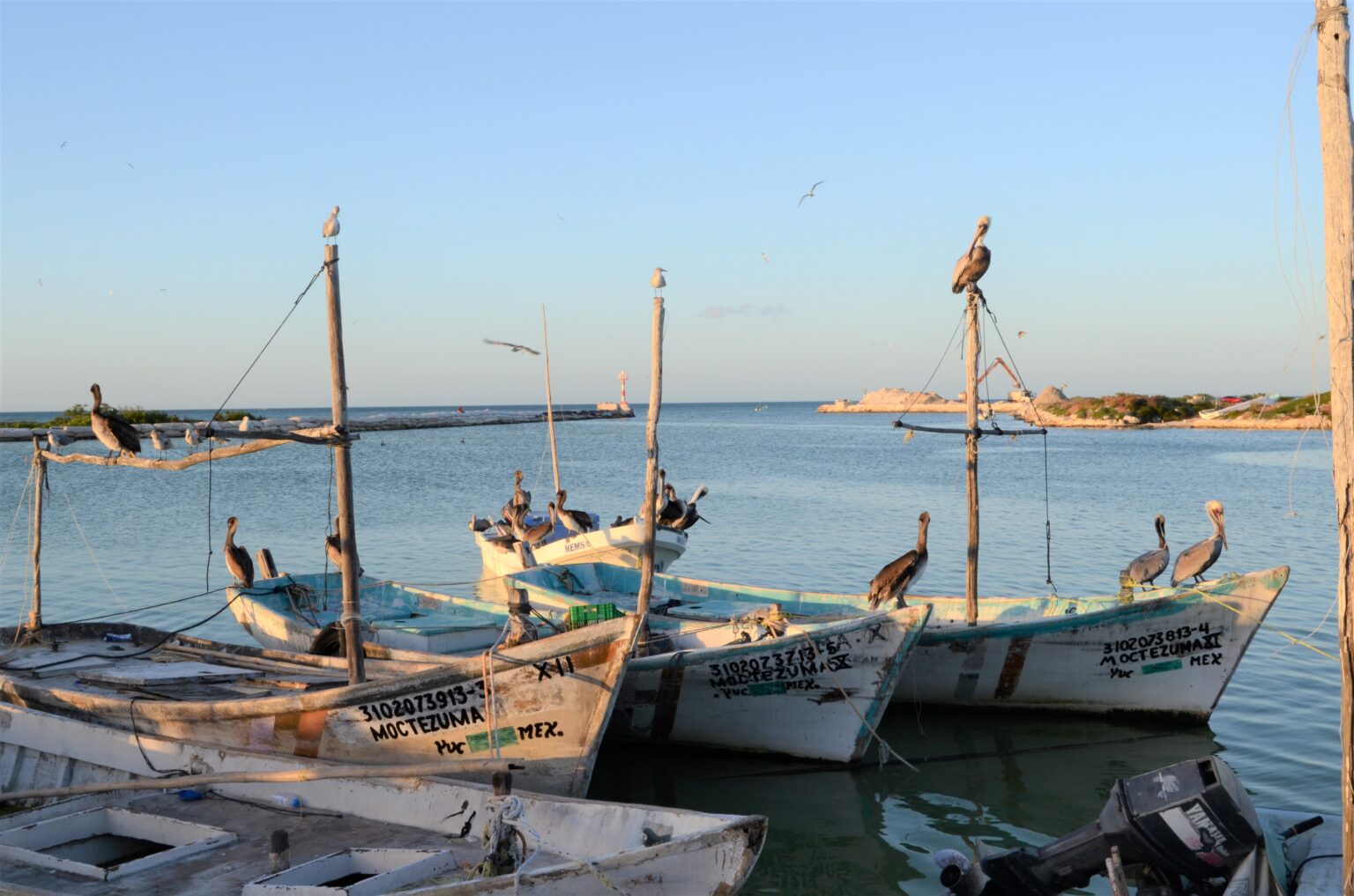
El Cuyo is a kite village at the far end of the road, and the honesty is the point. It does not pretend to be a resort, a colonial jewel or an expat haven. It is a quiet village of about 1,500 people with a beautiful beach, a working harbour full of fishing boats and pelicans, flamingos in the lagoon behind it, and a handful of restaurants that would hold their own in Cancun at half the price. The price of that bargain is a car, Spanish, patience with the low season, and a willingness to drive to Tizimin for the weekly shop and to Merida for serious medical care. Come for a month in the wind season, live in Centro or out on Avenida Veraniega like a resident, walk your prospective beach after a storm, and check whether Tizimin feels close enough for your health situation. If the village gets its hooks in you the way it does for the people who stay, you will understand everything in this profile from the inside.
Disclosure Affiliate link: if you buy or book through it, we may earn a commission at no extra cost to you. The full disclosure
US State Department Mexico travel advisory
El Cuyo Yucatan, Mexico Travel Secrets
Get Away From It All In El Cuyo, B Moreno
The Hidden Beach Town in Yucatan, Boundless Roads
Sunrises from El Cuyo, Rutopia
Beaches in Yucatan, Visit Mexico
El Cuyo Airbnb Data 2026, AirROI
Land for sale in El Cuyo, Pincali
Cost of living in Merida, Numbeo
El Cuyo, Yucatan, Mexico Dec 2021 - Boats, Wikimedia Commons
Keep planning: price your month in our cost calculator, compare cities side by side on the city comparison page, read our safety and healthcare guides, or take the city match quiz.
Hero photo: Fishing boats in El Cuyo harbour by Pavel Kirillov, CC BY-SA 2.0, via Wikimedia Commons.
Verified November 2026.
The one page brief carries this profile’s snapshot costs and rent, its healthcare frame and, where the profile states one, its advisory note, printed word for word.
No ratings yet. The average appears after 5 ratings, so one score cannot pose as a verdict. To rate this city profile, leave a comment below and pick your stars in the comment form. First comments are held for a quick moderation check before they appear.
Corrections and first-hand tips are welcome. Keep comments on topic and kind, and please do not share personal immigration case details here. Read the Comment Policy before posting.
Who’s behind the site
We are Paul and Adriana, and we run My Mexico Move together: Paul from the guides and the platform side, Adriana from Guanajuato, where she leads our partnerships and the ground work behind every profile.


Founder
Paul moved to Guanajuato in 2018 and founded My Mexico Move in 2021. He writes the guides and builds the city profiles, tools and member platform.

Partner
Adriana Vaca is Paul’s partner and leads partnerships and operations at My Mexico Move. Based in Guanajuato, she builds the relationships with the Mexican businesses in our directory, reviews our Spanish-language content so it reads the way it should, and runs the Mexico ground work our guides and city profiles depend on. A broadcaster by trade, she presented on Exa FM Irapuato and has worked as a commercial voice talent since 2017. Her studio, Voice con Vida, produces the audio across our sites.
Say hello any time, or write to us through the contact page.