

Paul Green
Founder
Paul moved to Guanajuato in 2018 and founded My Mexico Move in 2021. He writes the guides and builds the city profiles, tools and member platform.
City profile · Yucatan
A quiet Gulf beach village 45 minutes from Merida, with lower rents than the resort coasts, a Level 1 advisory, and the crater that ended the dinosaurs underneath it.
Verified November 2026
Chicxulub Puerto is the affordable Gulf beach answer to Progreso for readers who want Mérida hospitals with a quieter beach base. It is a small fishing town in Progreso municipality, on the Gulf of Mexico about 8 km (5 miles) east of Progreso and 42 km (26 miles) north of Mérida. The 2020 census counted 7,591 people here (INEGI). KaiPonte lists Chicxulub among five affordable beach towns to retire in 2026, describing peaceful Gulf coast living about 40 minutes from Mérida with lower housing prices than tourist-heavy destinations. The draw is the combination: a beach you can walk to, a big city with real hospitals 45 minutes away, and prices that still look like a fishing village rather than a resort. The trade is that the town is small, the beach is eroding, and much of daily life runs through Progreso or Mérida. Do not confuse it with Chicxulub Pueblo, a separate inland municipality about 20 km away by road, with 4,497 people in 2020. Say the name "cheek-shoo-LOOB": in Maya spelling, x sounds like "sh".
Chelem, the twin village west of Progreso, belongs in the same breath. Yucatan Today calls Chelem very popular with snowbirds from the US and Canada, a retiree blog documents choosing Chelem as an affordable base after living there for over a year, and International Living profiled it as an off-the-radar beach haven. Chicxulub Puerto and Chelem are the two villages either side of Progreso where foreign residents actually cluster. They are quieter than the port, have no cruise pier, and feel more like villages than a town. This profile covers Chicxulub Puerto as the subject, with Chelem as its twin, because that is how people actually live here: one coast road, one expat community spread across both villages, and Progreso in the middle for services.
Chicxulub Puerto is famous for something you cannot see. The town sits almost exactly over the geographic center of the Chicxulub crater, the buried impact structure left by the asteroid that ended the dinosaurs. The crater is about 200 km (125 miles) across and 66 million years old, half under land and half offshore, and the impactor was about 10 km wide. About 75 percent of species died out in the extinction that followed. A 2020 study puts the geometric center at 21.29 degrees N, 89.53 degrees W, about 8 km east of town. There is no rim to stand on anywhere on this coast: hundreds of meters of younger rock cover the crater, and it shows on the surface only as a faint trough, a ring of cenotes over the buried rim, and gravity and magnetic patterns that take instruments to read.
What you can visit instead is the crater story. The main park holds a memorial with a dinosaur figure and broken slabs, and a large T. rex stands on the street that runs to the pier. The Museo del Meteorito on the Progreso waterfront, 5.8 km away, is the state museum on the impact, open Tuesday to Sunday from 11:00 to 18:30, with general admission MX$350 for foreigners, MX$250 for Mexican nationals and MX$150 for Yucatán residents in July 2026. The Museo de Ciencias Chicxulub at Sierra Papacal, about 40 km away, is the museum built around the research itself, open on Saturdays with prior registration, with foreign admission MX$230 in July 2026. The Sendero Jurásico, a dinosaur walk on the Progreso to Chicxulub bypass, runs daily from 17:00 to 23:00, with foreign admission MX$300 under Progreso's 2026 revenue law. Confirm hours and prices before you go: the science museum posts its dates on social media, and the Sendero gate price has not been confirmed at the gate. The crater is the town's calling card, and it is also a good test of expectations. Come for the story and the quiet beach, not for a crater you can look at.
The town is small and flat, and the coast road is its spine. The beachfront streets run parallel to the Gulf, the numbered calles run inland from the shore, and the main park, the pier and the T. rex are all within a short walk of each other. A car is useful but not essential if you live near the beach and are happy to plan around buses. By car, Mérida is about 42 km and 45 minutes without traffic: take the Progreso highway for 25 km, go 6 km east on the Progreso to Telchac road, then north on the Conkal to Chicxulub road, without entering Progreso. The inland route through Conkal and Chicxulub Pueblo is 46 km and about 48 minutes. By bus, Autoprogreso runs from Calle 62 in central Mérida from 6:00 to 22:00, every 15 minutes, and the ride takes 40 to 50 minutes at MX$28 one way in July 2026. From Progreso, take a colectivo or local transport, about MX$20 in January 2025, or a taxi at MX$110 to MX$140. Uber averages MX$485 from Mérida and MX$81 from Progreso on Uber's route pages, read in October 2026, and those are averages, not fixed fares. Sources conflict on whether a direct bus runs to Chicxulub, so ask locally before you count on one. Mérida airport is the air link, about 45 minutes by road. A car matters most for the weekly shop in Mérida, for hospital trips, and for the beach villages east and west along the coast. We could not confirm an ATM or a pharmacy in town as of October 2026, so bring cash and do banking in Progreso.
There are no named neighborhoods with verified rent differences, so think in strips, not districts. The beachfront strip, calles 2 to 58 along the shore, holds the beach houses, the newer condos and the short-term rentals, and it commands the premium. The wide sand the town is known for survives only in a small sector, calles 24 to 30, where the comisario reported 20 to 30 m of beach in January 2026. Along most of the rest of that strip the beach is 0.5 to 1 m wide, or rock and sea against the buildings. A block or two inland, the town turns residential and local: small houses, tiendas, the park and the church, with lower rents and no sea view. East along the coast road toward Uaymitún and Telchac Puerto, the houses thin out into newer beachfront builds and open coast. West toward Progreso, the road passes the Sendero Jurásico and the bypass before reaching the port. Before you rent, walk the exact street at the exact season you plan to live there. The beach in front of a house can be sand in one sector and rock in the next, and the difference is the whole point of the address. We have no verified rent figures by neighborhood, so check listings on the beachfront and a block inland separately.
Daily shopping is small scale. The town has small shops and tiendas for everyday needs, and the Muelle Market at Chicxulub is the local market landmark. For a full shop, residents go to Progreso, 10 minutes away, where the Mercado Municipal in the centre is the daily market for produce, fish, meat and prepared food, and the town has small supermarkets and grocers. Chelem, the twin village west of Progreso, has farmers markets that are part of expat and community life, including the market at Natural Thangs between Chelem and Chuburná, where vendors sell organic vegetables, smoked meats, cheeses, baked goods and artisan products. The big shop, and the Yucatecan ingredients, are in Mérida: the Lucas de Gálvez Market is the one residents make a special trip for. Fresh fish comes off the boats along this coast, and the market keeps the food budget low. If you cook at home and shop at the markets, food is one of the cheapest parts of living here. If you expect a supermarket in the village, you will be driving to Progreso.
The foreign community here is real but small and spread out, and it is mostly Canadian and American, with snowbirds in winter and a smaller year-round core. Yucatan Today says Chelem is very popular with snowbirds from the US and Canada. A retiree blog documents choosing Chelem as an affordable retirement base and living there for over a year, describing the Gulf coast as the best place in Mexico for a boomer couple on a limited income. International Living profiled Chelem as an off-the-radar beach haven. Yucatan Living has covered expat-run activity here for years, including the Chicxulub Food Bank and the Chelem Funky Market. The Chix Food Bank, run by foreign residents since November 2005, is the clearest sign of how the community works: it began with a first despensa to 50 families and a waiting list of over 300 names, and it still operates from the village today. Everything Playa del Carmen names the Progreso area beach villages as the second main expat zone in Yucatán state after Mérida. Social life gathers around the expat-run restaurants and bars in Chelem and Chuburná, the village square in the evenings, and the weekly markets. English is spoken in the beach-strip restaurants and among the foreign residents, and Spanish carries the rest of daily life. We have no verified count of foreign residents in Chicxulub Puerto itself, so do not trust any number you see quoted for the village. The honest picture is a thin, friendly, seasonal community, not an expat town. If you need a large English-speaking social scene on tap, Mérida is where it lives, 45 minutes away.
Long-term rents in Chicxulub Puerto run lower than the resort coasts, and the listings back that up. Rentola's long-term listings in November 2026 show a house on Calle 20 at MX$15,000 a month, a two-bedroom apartment on Calle Playa at MX$16,500, and a four-bedroom house at MX$35,000. A two-bedroom beach apartment advertised for long-term rent of 6 to 12 months, one block from the ocean, was listed at MX$18,000 a month in October 2026, with two bedrooms, three bathrooms, shared pools, beach access, parking, Wi-Fi and maintenance included. At the mid-market rate of about MX$18.57 to the dollar on 13 November 2026, that puts a modest one- or two-bedroom long-term rental at roughly $810 to $970 a month. Beachfront and seasonal rentals cost more. A beachfront condo at Royal Beach II was advertised at MX$24,000 a month for October to November and MX$26,000 for December, or about $1,290 to $1,400, with a February to March package at MX$44,000. Rentola's average across its Chicxulub Puerto listings is MX$37,471, but that figure is skewed by a single MX$120,000 listing, so we do not use it as a guide. Rentola estimates utilities on top of rent at MX$500 to MX$1,500 a month for a typical rental, and notes that electricity bills spike in summer with air conditioning, reaching MX$1,000 to MX$1,500 in poorly insulated properties. Ask what the rent includes before you sign: water, air conditioning and internet vary building to building. As a nearby check, Mexico Relocation Guide puts Progreso long-term rents at $450 to $1,695 a month in 2026. Check live listings and rent for a few weeks before signing a lease, and price the season you will actually live there, not the cheapest month on the listing.
Buying here is buying on the coast, so a foreign buyer uses a fideicomiso bank trust, with a notario público handling the closing. That is the standard route for the whole Progreso coast, and it is not a shortcut to skip. We have no verified sale-price index for the village, so we print no purchase prices, and we would not advise buying on a first visit. What the listings do show is the shape of the market: older beach houses and newer condos along the shore, larger houses a block inland, and new beachfront condo development arriving. One new development in Chicxulub Puerto, La Punta, was advertised in June 2026 as three apartment towers with a beach club, delivered in 2028, from MX$3,321,000. Treat that as a single developer asking price, not a market rate. Two checks matter more than any price. First, the beach in front of a property can be rock, not sand, and erosion is active, so inspect the shore at the property itself. Second, the marsh behind town falls under environmental law: Profepa sealed lots filled over mangrove after a September 2025 inspection and ordered a full temporary closure in March 2026. A lot beside the mangrove needs its legal and environmental status checked before you buy. Rent first, buy after a full season, and use a notario and an independent lawyer, not the seller's recommendation alone.
There is no hospital in Chicxulub Puerto, and we have not verified a clinic, a doctor or a pharmacy in the village itself. For anything beyond basic care, the plan is Progreso for emergencies and Mérida for hospital care. In Progreso there is the Centro Médico Americano, a private hospital with a 24-hour emergency room, the Cruz Roja Progreso for emergency care, and the Centro de Salud. We have not verified English-language service or insurer billing at any of them, so confirm those in person. Mérida, about 45 minutes away, is the hospital base, and it is a strong one: the city is a regional medical hub, and its major private hospitals have English-speaking doctors.
| Facility | Where | What it is |
|---|---|---|
| Star Médica Mérida | Altabrisa, north Mérida | Largest and most modern private hospital in Mérida, widest range of specialties, most consistent English-language support. Ranked first in the southern region in Expansión magazine's Mexico's Best Private Hospitals ranking. |
| Hospital Faro del Mayab | North Mérida, near Prolongación Montejo | Christus Muguerza hospital, known for surgical care and English-speaking physicians, often priced below Star Médica. |
| Clínica de Mérida | Central Mérida | Well-established full-service private hospital with physiotherapy, dialysis, imaging and intensive care. Many doctors speak English. |
| Centro Médico de las Américas | Mérida | One of Mérida's four major private hospitals, named in the same group as Star Médica, Clínica de Mérida and Faro del Mayab. |
| IMSS Hospital General Regional No. 1 Lic. Ignacio García Téllez | Mérida | Public IMSS hospital for enrolled members. |
| Hospital General Dr. Agustín O'Horán | Mérida | Public general hospital, the main public referral hospital in the city. |
If you have a chronic condition, build a transfer plan into your insurance decision before you move: know which Mérida hospital your cover uses, how you get there at night, and what the Progreso emergency room can and cannot do. Medicare does not cover routine care in Mexico, so budget for Mexican private insurance or IMSS enrolment.
Chicxulub Puerto suits retirees who want a quiet beach, a small town, and a big city with strong hospitals 45 minutes away, without Caribbean prices, and who can live with a thin social scene and a beach that is shrinking in places. KaiPonte puts a couple's monthly budget here at $1,900 to $2,600 in 2026, with healthcare rated excellent because Mérida is nearby, and calls the beaches peaceful with top-tier healthcare access. It suits snowbirds well: the winter months are the best weather, the coast is quiet, and the community gathers in the winter season. It suits less well anyone who wants a wide sandy beach in front of every house, a lively town, or medical care in the village itself. The summer test matters. July and August bring Mérida families to the coast in large numbers, and the town changes character: busier beaches, fuller rentals and more noise. The winter test matters too. When the snowbirds leave, the village goes quiet, and some of the social life leaves with them. Come for a month in each season before you commit, and check whether 45 minutes to a hospital feels close enough for your health situation.
Remote work is the realistic path. The village has no verified coworking space, so do not plan around one, and we have no verified town-wide fibre figure. What the listings show is that individual rentals commonly include internet: a beach house listing includes 50 Mb internet, and a beachfront condo listing advertises high-speed Wi-Fi. Check the actual speed in the exact property before you sign, and have a backup, because a beach village connection is not a city connection. Local employment is fishing, port work and tourism, and a foreigner needs a work permit tied to a residency status and an employer to sponsor it. Do not plan on picking up local work casually. Some foreign residents run small businesses in the wider coast area, including the expat-run restaurants and bars in Chelem and Chuburná, but that is self-employment with permits, not a job market. The 183-day tax rule applies to remote workers who stay long term, so take advice on tax residency before you settle.
Family life here is beach-based and seasonal. The Sendero Jurásico dinosaur walk, the crater story, the pier and the beach are the weekend circuit, and the Parador de Uaymitún, 9 km east on the coast road, reopened on 23 July 2026 after six years closed, with a tower, flamingos in the morning and at sunset, and a food area that opens in the evening. The town's patron feast is the Virgen de la Asunción, honoured every 15 August with a mass, and in 2024 the main day was 13 August, with mass on the beach at 7:00 and a boat procession from near calle 24. Summer weekends bring crowds, and the school year is quieter. The trade for families is the same as for everyone else: a quiet beach and low costs against a small town with no verified school of its own and no hospital. If your children need English-language schooling, the school run is to Mérida. See the schools section.
We have not verified the names, fees or admissions of schools in Chicxulub Puerto, so families should check that in person before committing: the town has local schools, but no international school is verified here. The nearest international schooling is in Mérida, about 45 minutes away. The two names expat families use most are the American School of Mérida, which offers an American-style curriculum with Advanced Placement courses from preschool to grade 12, and Madison International School in north Mérida, which offers the International Baccalaureate. A 2026 expat guide estimates typical annual tuition at Mérida's international schools at MX$120,000 to MX$250,000 per child, roughly $6,500 to $13,500, and warns that waitlists can be long, so apply months ahead and check each school's current fees before you apply. The nearest university, the Universidad Autónoma de Yucatán, is also in Mérida. For a family move, the school decision and the housing decision are the same decision: price the Mérida school run, in time and in fees, before you sign a coastal lease.
The table is Gulf seafood: fresh fish and shrimp, ceviche, and the fondas around the market in Progreso, plus the restaurants of the Progreso malecón. Eating out is cheaper than in Mérida's centre or on the Caribbean coast, and the market keeps cooking at home affordable. In Chicxulub Puerto itself we have not verified any individual restaurant by name, so we name none: the most recent town guide we found states plainly that it recommends no places yet because none has been verified. The wider coast fills the gap. Chelem and Chuburná have expat-run restaurants and bars, and Progreso's malecón restaurants serve summer visitors and charge accordingly, while the market fondas are where residents eat. For a food shop, the pattern is the same as for everything else: daily needs in the village and Progreso, the serious shop in Mérida. If food is a big part of why you move, spend a week eating in Progreso and Chelem before you judge the coast by the village alone.
Nightlife is quiet, and outside the summer season it is very quiet. We have not verified a bar or nightlife list for the village itself, so we print none. The pattern on this coast is that bars and restaurants cluster on the Progreso malecón, with live music on summer weekends, and most places close early the rest of the year. Chelem and Chuburná add the expat-run bars that stay open through the winter season. Mérida is the late-night option, about 45 minutes away. If you want a drink with a view and an early night, the coast suits you. If you want a late bar scene within walking distance, it does not, and no listing will change that.
This is the section to read before you rent beachfront. The beach here is eroding, and the erosion is documented, not rumoured. After Hurricane Milton churned through the Gulf in October 2024 without making landfall in Yucatán, Progreso lost up to 20 m (about 65 feet) of beach in a matter of weeks. Some parts of the coast have lost more than 15 m (about 50 feet) over the past decade, and the hardest hit stretches named in October 2026 include Chicxulub Puerto and Chelem. Research on this coast has found retreats of up to 6 m a year in high-risk zones including Chelem, Chuburná and Chicxulub, and an average loss of 19 m along the whole Yucatán coastline between 1980 and 2019. The causes are a mix of the Progreso pier interrupting sand flow from east to west, storms, and decades of building on the shore. In Chicxulub Puerto, the beach near the pier has practically disappeared, leaving only sharp rocks in places, and fishermen's boats sit exposed to waves because no beach arc shelters them. During northerly wind seasons, many vessels suffer damage or become unusable. The state has been studying the shoreline from Progreso to Telchac Puerto with UNAM, and sand refills so far have been small: 720 cubic metres spread on the east end of the Progreso malecón in September 2025, with about 1,500 cubic metres proposed next. None of that is a fix for a beachfront house. Check the shore at the property, ask residents what the last norte did to it, and do not pay a beachfront premium for a beach that is no longer there.
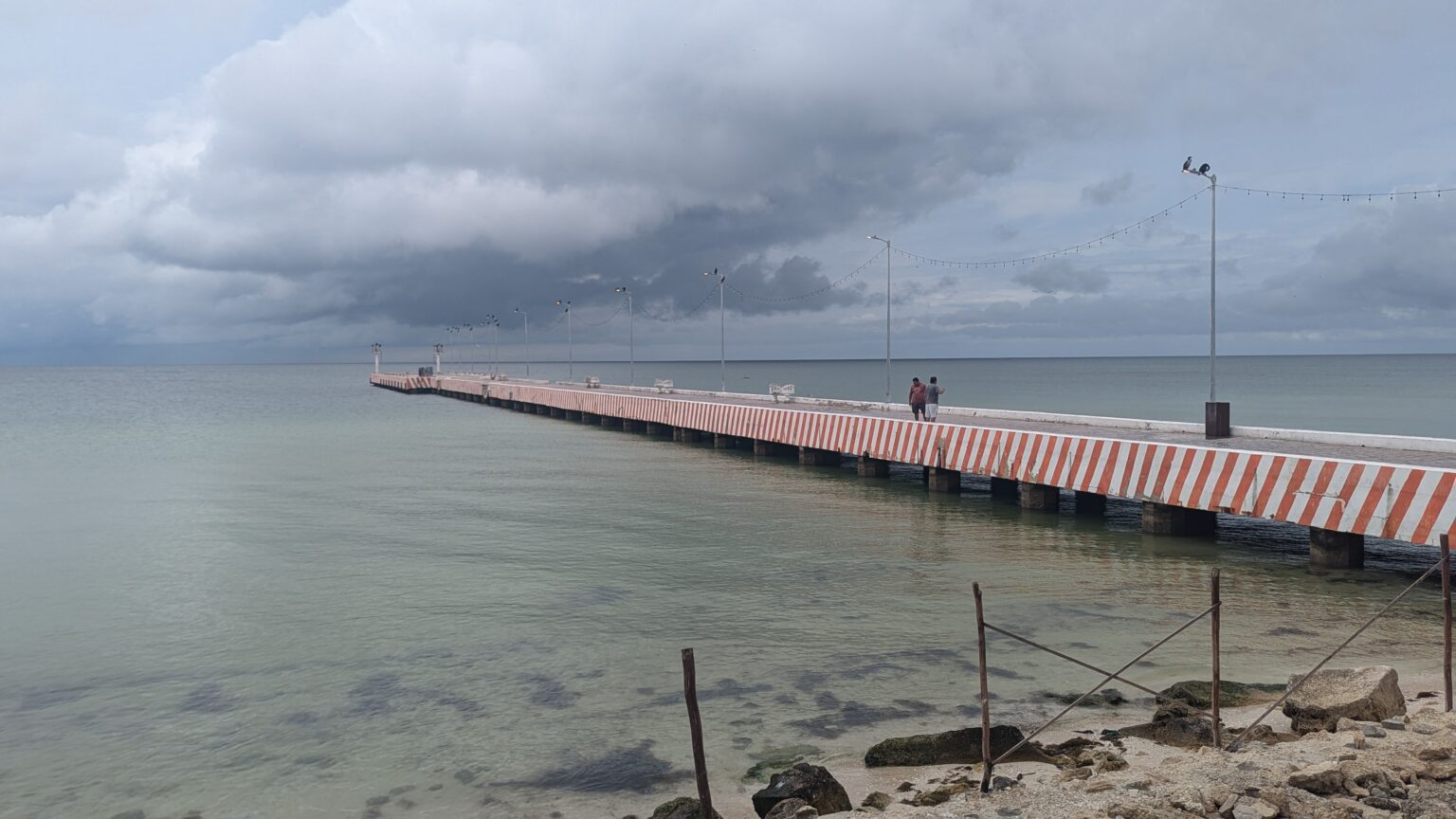
Storms come in two forms. Nortes, the winter north winds, run from November to February, with an average of 20 to 25 reaching Yucatán each winter season. They bring wind, rough seas and coastal flooding, and they are the more frequent threat on this north-facing coast. Hurricanes are less frequent but stronger: Hurricane Isidore made landfall near Puerto Telchac on 22 September 2002 as a Category 3, and the hurricane season runs from June to November. The water itself is clean: the three latest Cofepris readings for Chicxulub in 2026 all sat far below the limit, with 13 enterococci per 100 ml in the June 2026 reading against a limit of 200. That says nothing about currents or waves, and no source we read places lifeguards here. The pier needs its own warning. On 28 September 2025 a section of the pier's side steps collapsed and two people fell into the sea, with injuries. It stayed partly closed from that day, and as of 31 October 2026 no later notice of repair, reopening or closure had been found. Ask at the comisaría before you walk out on it. The hero photo on this page was taken in June 2024, before the collapse, and does not show the pier's condition today.
Yucatán is at Level 1 (Exercise Normal Precautions) in the US State Department Mexico advisory dated 11 August 2026, verified November 2026. Yucatán is one of two states at Level 1, the lowest level on the scale, the other being Campeche, and the advisory places no specific restrictions on US government employees in the state. The pattern most residents describe is a quiet, orderly one: a small fishing village where people know each other, and standard precautions apply. We do not publish a town crime rate, because no comparable verified figure is available: the official statistics are published by municipality, so there is no town figure, and the count for all of Progreso is not yet confirmed in the official file. Summer weekends bring crowds, so take the usual care on a busy beach, and check the pier warning in the section above before you walk out on it. Advisory levels change, so read the current advisory before you commit, and check it again before any trip.
Check live listings and rent for a few weeks before signing a lease. The figures below are the ones we could verify for this town. No reliable published figure yet supports a full monthly total for one person, so no single-person total is printed here. KaiPonte's published estimate for a couple is $1,900 to $2,600 a month in 2026, and that is the closest thing to a whole-month figure for Chicxulub. Dollar conversions use about MX$18.57 to the dollar, the mid-market rate on 13 November 2026.
| Item | Monthly cost | Source and note |
|---|---|---|
| Rent, long-term 1 to 2 bedroom | MX$15,000 to MX$18,000 (about $810 to $970) | Rentola long-term listings, November 2026; long-term beach apartment listing, October 2026. Non-beachfront and a block inland are the cheaper end. |
| Rent, beachfront or seasonal condo | MX$24,000 to MX$26,000 (about $1,290 to $1,400) | Beachfront condo advertised October to December 2026. Short-term and seasonal rates run higher than long-term ones. |
| Rent, larger house | MX$35,000 (about $1,885) | Four-bedroom house, Rentola, November 2026. |
| Utilities on top of rent | MX$500 to MX$1,500 (about $27 to $81) | Rentola estimate for Chicxulub Puerto rentals, November 2026. Electricity can reach MX$1,000 to MX$1,500 in summer in poorly insulated properties. |
| Transport | Bus MX$28 each way; colectivo about MX$20; taxi MX$110 to MX$140; Uber average MX$485 from Mérida, MX$81 from Progreso | Autoprogreso fare July 2026; colectivo and taxi figures January 2025 and undated; Uber averages October 2026. A car adds fuel, insurance and upkeep, which we have not priced for this town. |
| Couple, whole month | $1,900 to $2,600 | KaiPonte estimate for a couple in Chicxulub, 2026. Includes rent. Treat it as an estimate, not a verified range. |
| Groceries and eating out | No town figure verified | No town-specific grocery or restaurant price survey was found. Market shopping in Progreso keeps food costs low, but we print no number we cannot source. |
The honest way to use this table is to price the season you will live there. A winter snowbird pays the seasonal condo rate, a year-round renter pays the long-term rate, and a July arrival pays the summer price for a busier beach. If a listing looks cheap, check whether the beach in front of it still exists.
You will thrive if you want a quiet Gulf beach, a small town where people know each other, low rents by coastal standards, and a big city with strong hospitals 45 minutes away, and if you are comfortable driving to Progreso or Mérida for most services. You will thrive if you are a snowbird who wants winter sun without a resort, a retiree on a fixed income who cooks at home and shops at the markets, or a remote worker who needs quiet more than nightlife.
You will struggle if you want a wide sandy beach in front of your house, because erosion has taken much of it, and the sector with real sand is small. You will struggle if you need a hospital, a pharmacy or an ATM in the village, a large English-speaking social scene, late nightlife, or an international school within walking distance. You will struggle if you cannot drive, because the bus runs to Progreso, not reliably to your door, and the last return is unconfirmed. And you will struggle if you buy beachfront without checking the shore, the mangrove rules and the pier: the cheapest-looking beach house can be the most expensive mistake on this coast.
Chicxulub Puerto is the quiet end of the Progreso coast: a fishing village with a famous crater underneath it, a shrinking beach, lower rents than the resort coasts, and Mérida's hospitals 45 minutes away. It is not a resort, not a wide-beach town, and not a place to buy blind. Rent for a season, walk the beach in front of the house you are considering, spend a July weekend and a February weekday there, and check the pier before you walk it. If the quiet suits you and the hospital distance works for your health, the village gives you a Gulf beach life at a price few other Mexican coasts still offer. Compare Progreso for the port town version of the same coast, and Mérida for the city that makes the coast workable.
Disclosure Affiliate link: if you buy or book through it, we may earn a commission at no extra cost to you. The full disclosure
Population is from the INEGI 2020 census: 7,591 in Chicxulub Puerto and 4,497 in Chicxulub Pueblo. Distances are 8 km east of Progreso and 42 km north of Mérida. Rents are from Rentola long-term listings in Chicxulub Puerto, November 2026, a long-term beach apartment listing from October 2026, and a seasonal beachfront condo advertisement from July 2026. Dollar conversions use about MX$18.57 to the dollar, the mid-market rate on 13 November 2026. The couple budget of $1,900 to $2,600 a month is KaiPonte's 2026 estimate. Transport fares are Autoprogreso MX$28 from POSTA, July 2026; colectivo about MX$20 and taxi MX$110 to MX$140 via Mérida Living, October 2026; Uber averages from Uber's route pages, October 2026. The crater figures are from Mérida Living's Chicxulub Puerto guide, checked 31 October 2026, citing Collins and colleagues in Nature Communications (2020) and Gaceta UNAM (2018). Museum hours and prices are from POSTA, July 2026, and Progreso's 2026 revenue law. Climate normals are from the Servicio Meteorológico Nacional, station 31007 Chicxulub Puerto, 1991 to 2020. Erosion figures are from Yucatán Magazine, 22 October 2026, and Riviera Maya News, 2026, with the January 2026 beach report from the town comisario via Por Esto. The pier collapse of 28 September 2025 is from Por Esto and Diario de Yucatán, with no later repair notice found as of 31 October 2026. The advisory level is from the US State Department Mexico advisory dated 11 August 2026, checked November 2026. Hospital names were checked against public listings in November 2026: Yucatan Magazine's Mérida hospital guide (August 2025) and Senso's English-speaking hospitals guide (September 2026). School names and the fee estimate are from The LatInvestor's Mérida expat guide, October 2026. Expat community evidence is from Yucatan Today, the Xyu and Beyond retiree blog, International Living, Yucatan Living, and the Chicxulub Food Bank's own site. Figures we could not verify are marked as unverified in the sections above, so you can see exactly what still needs checking on the ground.
Keep planning: price your month in our cost calculator, compare cities side by side on the city comparison page, read our safety and healthcare guides, or take the city match quiz.
Hero photo: The pier at Chicxulub Puerto by edenpictures, CC BY 2.0, via Wikimedia Commons. Photo taken June 2024, before the pier steps collapsed in September 2025.
Verified November 2026.
The one page brief carries this profile’s snapshot costs and rent, its healthcare frame and, where the profile states one, its advisory note, printed word for word.
No ratings yet. The average appears after 5 ratings, so one score cannot pose as a verdict. To rate this city profile, leave a comment below and pick your stars in the comment form. First comments are held for a quick moderation check before they appear.
Corrections and first-hand tips are welcome. Keep comments on topic and kind, and please do not share personal immigration case details here. Read the Comment Policy before posting.
Find Your City in Mexico walks the main destinations through cost, safety, climate, healthcare and community, in order.
money back guarantee
Who’s behind the site
We are Paul and Adriana, and we run My Mexico Move together: Paul from the guides and the platform side, Adriana from Guanajuato, where she leads our partnerships and the ground work behind every profile.
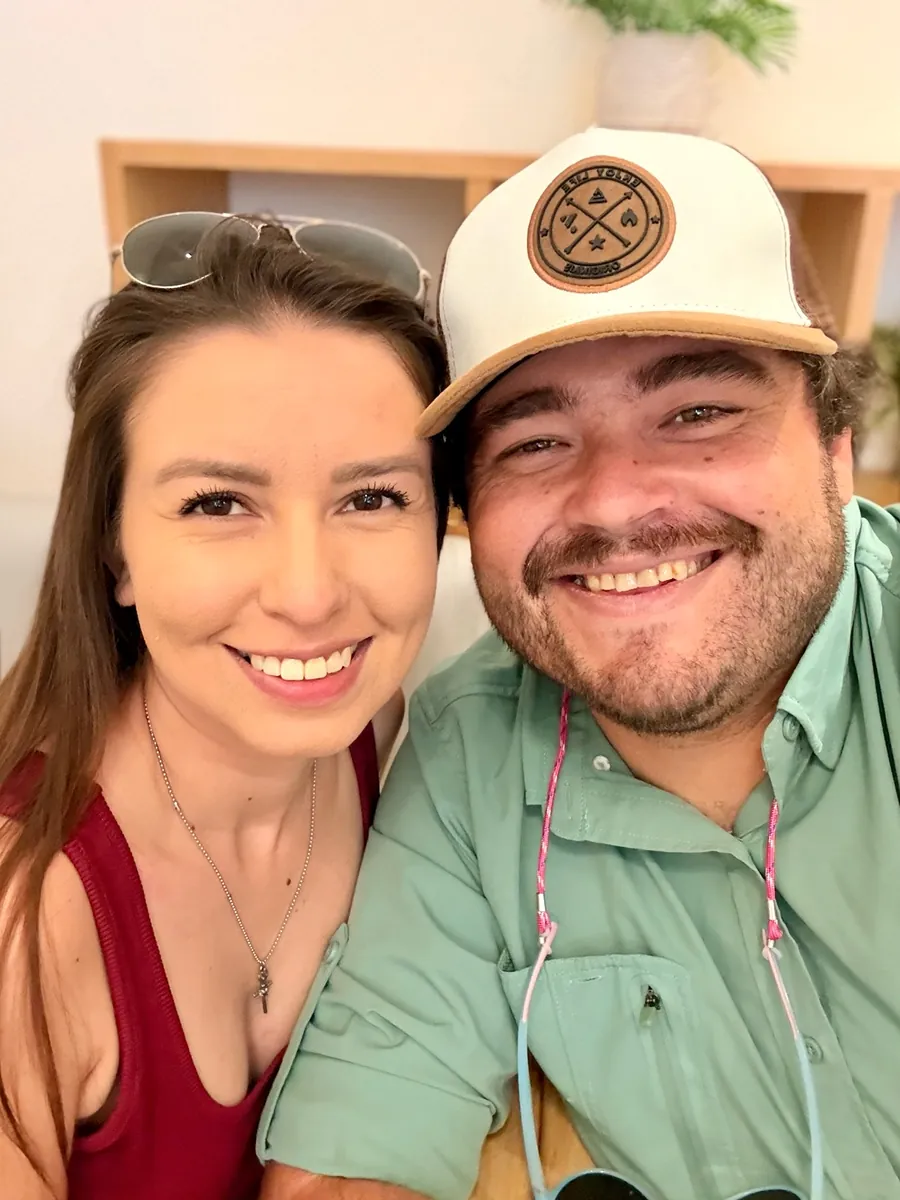
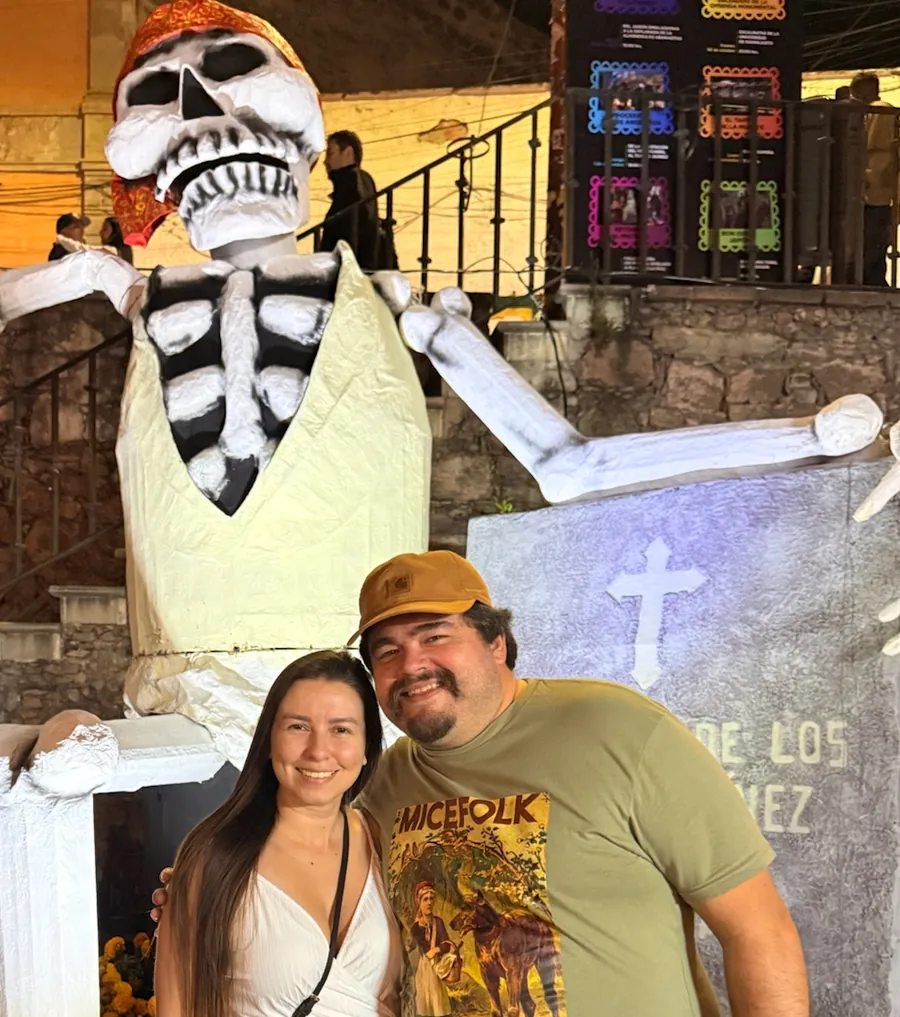
Founder
Paul moved to Guanajuato in 2018 and founded My Mexico Move in 2021. He writes the guides and builds the city profiles, tools and member platform.

Partner
Adriana Vaca is Paul’s partner and leads partnerships and operations at My Mexico Move. Based in Guanajuato, she builds the relationships with the Mexican businesses in our directory, reviews our Spanish-language content so it reads the way it should, and runs the Mexico ground work our guides and city profiles depend on. A broadcaster by trade, she presented on Exa FM Irapuato and has worked as a commercial voice talent since 2017. Her studio, Voice con Vida, produces the audio across our sites.
Say hello any time, or write to us through the contact page.